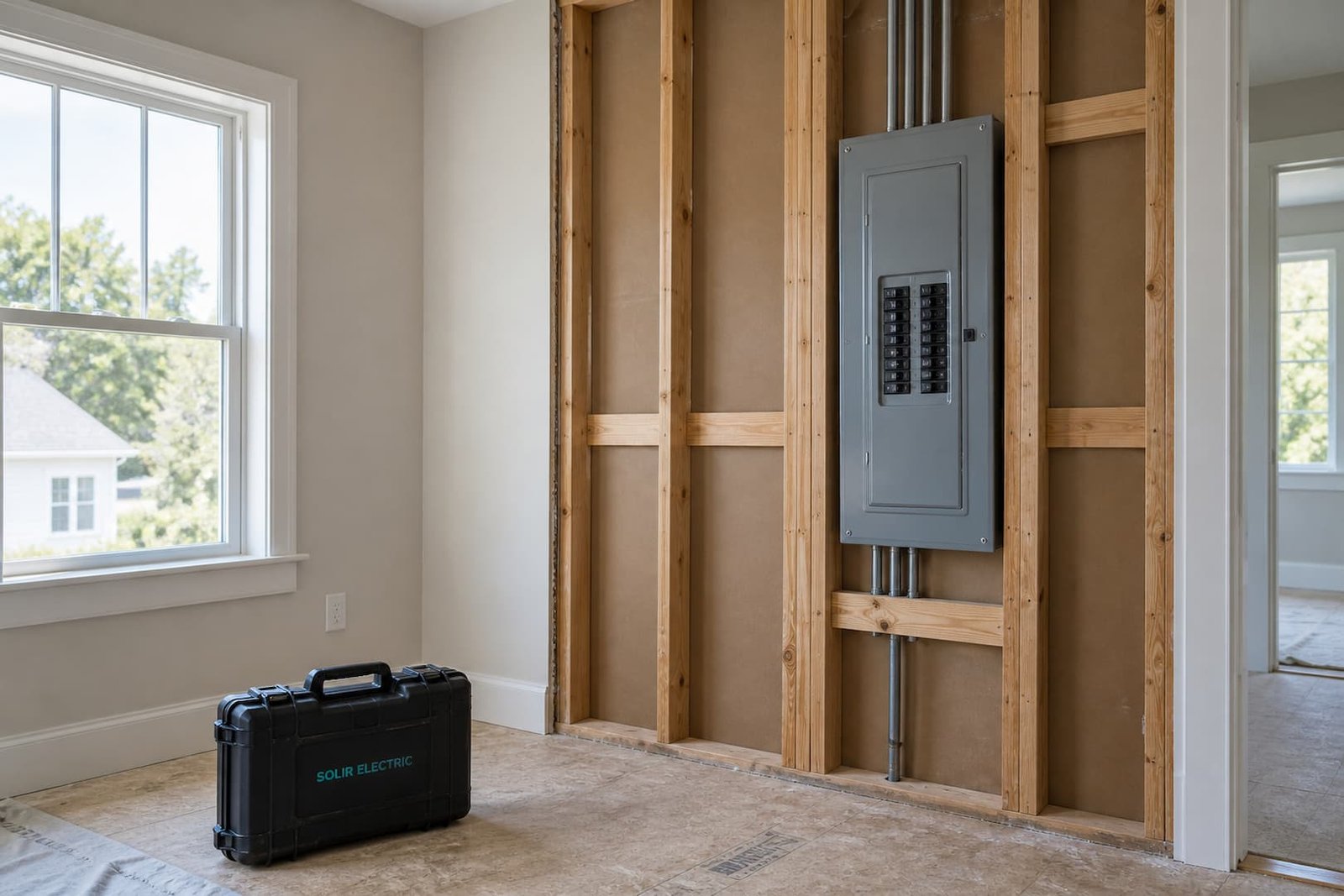
How do I know if I need a full rewire?
An assessment looks at wiring condition, materials, existing alterations and the changes you want. Recurring faults may have a local cause or reveal a broader issue. The recommendation should identify evidence for the proposed scope, rather than relying on the house’s age alone.
Can you rewire the house without removing all the walls?
Some routes may be accessible through an attic, crawlspace or selected openings. The building’s framing, finishes and existing installation determine what is practical. We discuss expected openings after assessing access; completely damage-free rewiring should not be assumed.
Can we stay in the house while it is rewired?
Possibly, depending on the scope and staging. Rooms and circuits may be unavailable, and larger projects can be disruptive. Share essential power needs and household routines so access, interruptions and the practicality of remaining in the home can be discussed.
Is replacing aluminum wiring the only option?
Specific repair approaches exist for certain aluminum branch wiring installations, but suitability depends on the condition and method. A general outlet replacement does not resolve every connection. We discuss the findings and appropriate next step without assuming one repair fits every house.
Does rewiring include a new panel and all new fixtures?
Only when those items are included in the agreed scope. Branch wiring, panel work, switches, receptacles, fixtures and finish repairs should each be identified. An existing suitable fixture may remain while the wiring serving it changes.
Should rewiring happen before a kitchen remodel is finished?
Plan it before cabinets, tile and finished walls limit access. Final appliance specifications, outlet positions and lighting choices help define the rough wiring. Coordinate required inspections and other trades before the work is concealed.