
Home charging that fits your drive
EV charger installation in Sacramento
Come home, plug in and leave with the charge your next day needs. Solir Electric plans and installs home EV charging in Sacramento. We check your vehicle, parking space and electrical capacity before choosing a circuit or charger.
Start with where you park and how you drive
Your daily mileage and overnight parking time matter more than the largest charging number on a product page. Share the vehicle model, where its charge port sits, and whether you expect a second EV. We can then discuss a charging setup that fits the space and the available power.
Level 1 charging
Level 1 uses 120-volt power with compatible charging equipment. It may suit modest daily driving and long parking periods, but an existing outlet still needs to be appropriate for the load. An outlet’s location or appearance does not establish that its circuit is suitable.
Level 2 charging
Residential Level 2 equipment uses 240-volt power and can replenish energy faster. The circuit limits the available output. Charger settings and the vehicle’s capabilities also affect the rate. A capable charger cannot make a vehicle accept more AC power than its onboard charger supports.
The parking space is part of the design
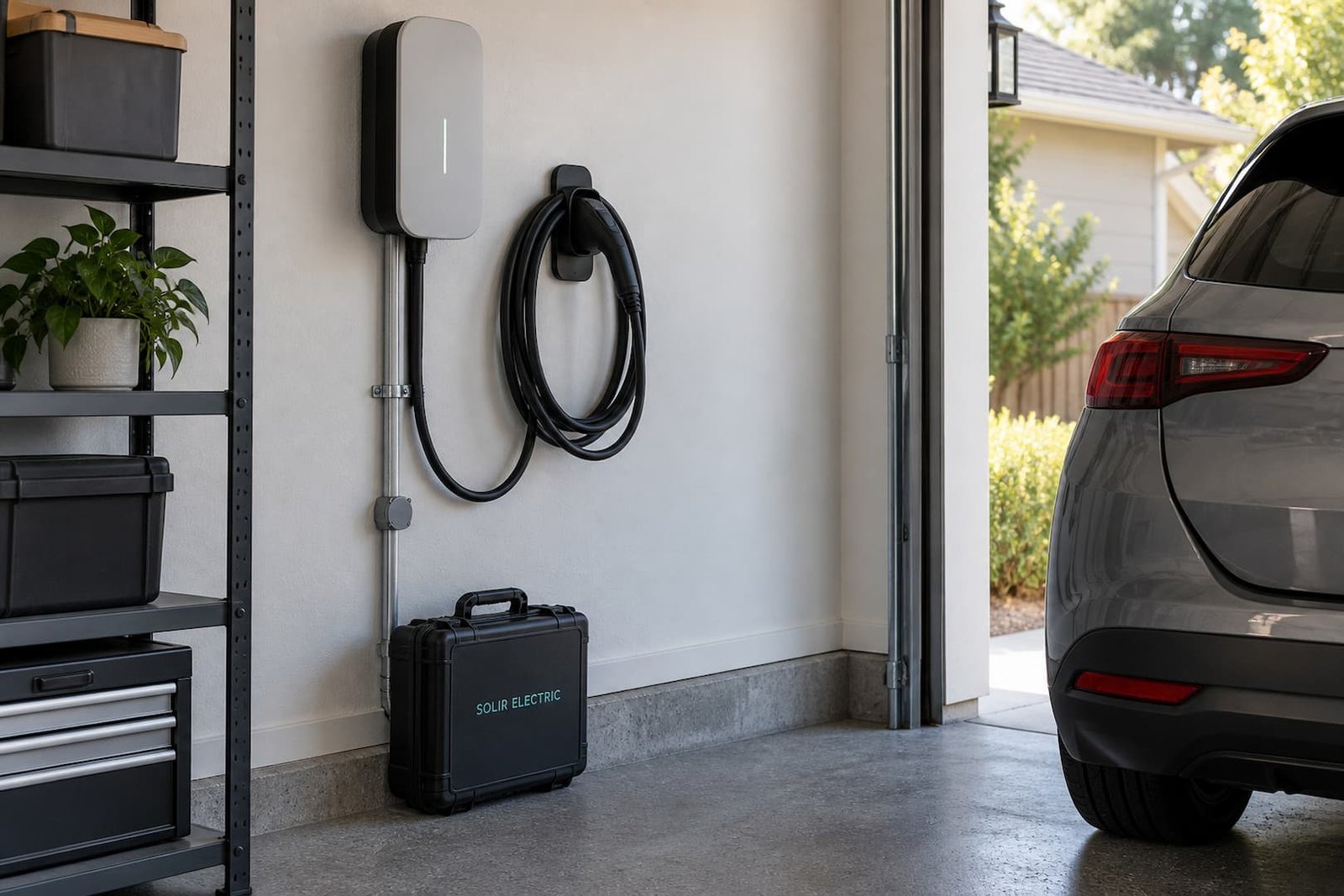
Put the charger where the cable will actually reach
Garage walls, a carport and a driveway each bring different requirements. We look at normal parking positions, cable reach, walking routes, door movement and a practical place to store the connector. A cable stretched across a walkway is a layout problem to solve before installation.
Outdoor equipment needs a suitable environmental rating and mounting location. The route from the panel can involve an accessible wall, attic, crawlspace or trench, and that route often affects installation cost more than a small change in charger output.
If you have an attached garage with the panel nearby, send photos of both areas. For a detached garage or distant parking space, include the route between them and mention any paving or landscaping the work would cross.
Hardwired charger or a plug-in unit?
| Choice | What to consider |
|---|---|
| Hardwired charging | A fixed connection suited to the selected charger and circuit. The installation must follow the equipment instructions and required circuit protection. |
| Plug-in charging | A compatible receptacle and branch circuit matched to the charger. Existing dryer or garage outlets need assessment before reuse. |
| Connector compatibility | The charger connector must work with the vehicle. Check the exact product and any vehicle-approved adapter, especially when planning for two different EVs. |
| Connected features | Scheduling, access settings and usage reporting vary by product. Wi-Fi coverage and account setup can matter for those features. |
NEMA 14-50 and NEMA 6-50 charging outlets
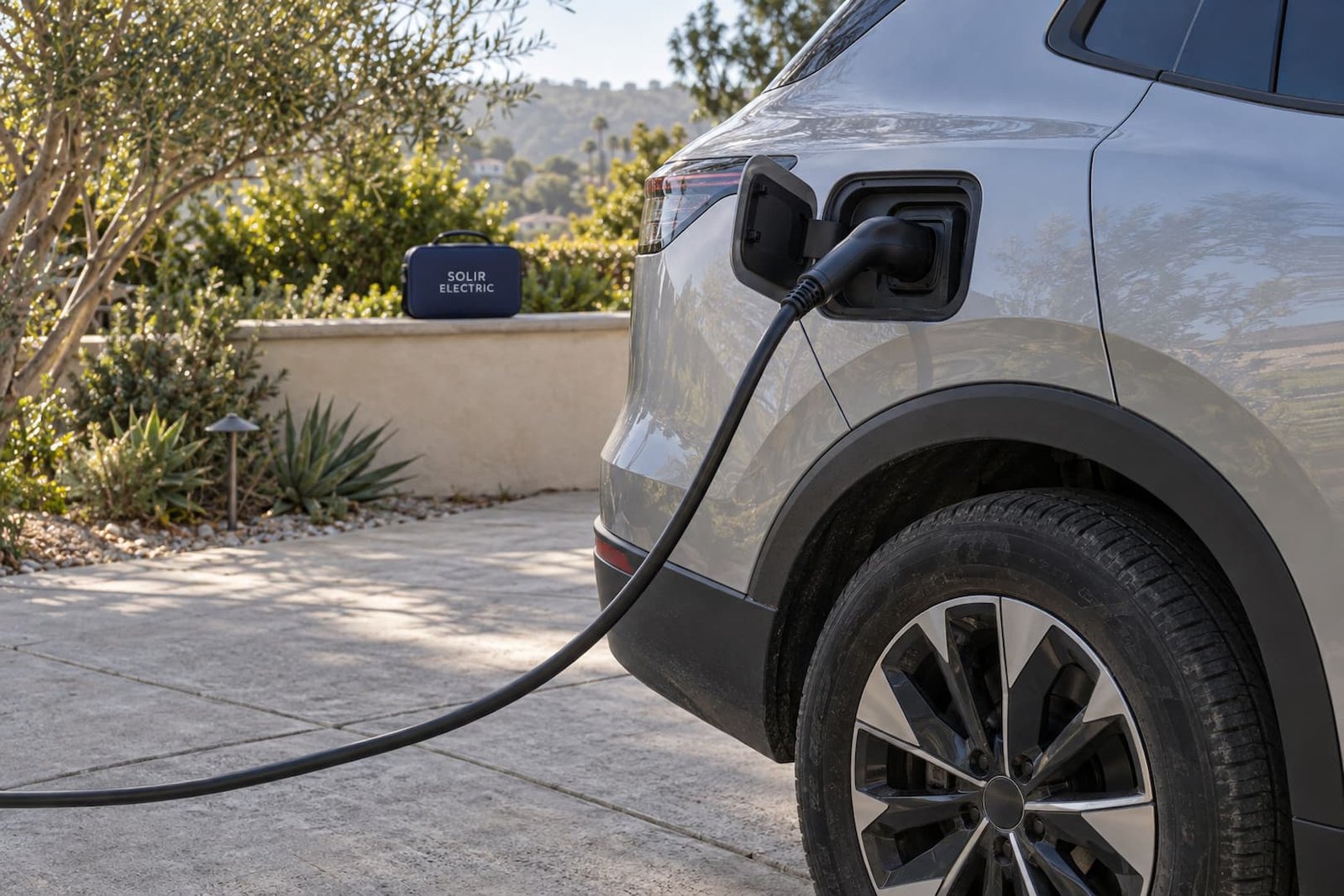
For a plug-in charger, the receptacle must match the approved plug or adapter for that equipment. NEMA 14-50 and NEMA 6-50 are different outlet configurations; neither is a universal connection for every EV charger. Tesla lists both among the supported options for its Mobile Connector, with the matching adapter.
We assess the entire branch circuit before installing a charging outlet or reusing one already in the garage. The receptacle, conductors, connections and required protection must support the intended charging load. The number on the outlet does not mean the vehicle can continuously charge at that current.
The outlet location and circuit route affect the price, while a worn or unsuitable existing receptacle can add replacement work. We compare those requirements with a hardwired installation when you are deciding which connection suits the charger.
For Tesla Wall Connector and other home charging equipment, bring the exact model information. Specifications can differ within a product family. The proposal should identify who supplies the charger and include the parts and setup needed for that model.
Use available power thoughtfully
An EV does not automatically mean a panel upgrade
A load assessment checks whether the existing electrical system can support the proposed charging load. Empty breaker spaces do not answer that question. If the capacity is limited, we discuss the choices before recommending broader work.
Choose an appropriate charge rate
A charger can sometimes be configured at a lower output that fits the electrical system and still covers the daily drive. The charger’s setting, circuit size and protective devices must agree.
Consider compatible load management
Some systems adjust charging as other household loads change. Tesla, for example, describes static and dynamic options in its Wall Connector power management guidance. Product compatibility, required hardware and local approval need checking for the actual installation.
From site assessment to the first charging session
The project begins with the vehicle, equipment and installation route. We use the capacity assessment and agreed scope to plan the proposal, permits and any utility work. The authority for your address determines the applicable requirements.
Installation includes the agreed circuit and mounting work, electrical checks and configuration appropriate to the charger. At handover, the charging settings and basic operation should be clear. Vehicle and app settings can also influence when charging starts.
Cost depends on the circuit route, access, charger type, required protection, load management and any panel or service work. Check current utility programs before committing to equipment: eligibility and contractor requirements can change, and a rebate should never be assumed in an estimate.
Before you book
Home charging questions
Can you install a Tesla Wall Connector?
Contact us with the exact Wall Connector model, property address and photos of the proposed location. We can discuss the circuit, capacity assessment and configuration needed for the installation. A brand name alone does not establish the correct circuit or output setting.
Can I use the existing dryer outlet for my EV?
It needs an assessment first. The circuit, receptacle condition, charging equipment and any shared appliance arrangement all matter. Do not use improvised adapters or splitters. Where approved sharing equipment is suitable, its instructions and the local requirements govern the installation.
How fast will my car charge at home?
The vehicle’s AC charging limit, available circuit capacity, charger output and battery conditions all affect the result. Tell us your model and typical daily mileage. We can discuss a practical output, but an installation should not promise one charging time for every vehicle.
Will I need a permit for a home charger?
New charging equipment and its electrical work need review against the requirements for your address and scope. Confirm the permit and inspection responsibilities in the proposal. Work affecting the electrical service can also involve the utility.
Can one installation support two electric vehicles?
Possibly. Compatible charging equipment may share available power, or the design may use separate circuits. The vehicles’ parking positions, charging schedules and electrical load determine the options. Mention the second vehicle before a circuit route is finalized.
Should I buy the charger before requesting an estimate?
You can send a product you are considering, but checking the installation first can prevent a mismatch. Connection type, connector, power management compatibility and site conditions may affect the selection. Confirm who supplies the charger in the written scope.
Can a home charger be installed outdoors?
An outdoor installation may be possible with equipment rated for the exposure and a suitable mounting location. We assess weather exposure, cable routing, physical protection and the path to the panel. The charger instructions and local requirements determine the installation details.
Talk to Solir Electric
Make your parking space ready for charging
Include your vehicle model, typical daily mileage and parking location. If you have chosen a charger, add its model and mention any plans for a second EV so the installation discussion covers those needs.