
Paths and steps
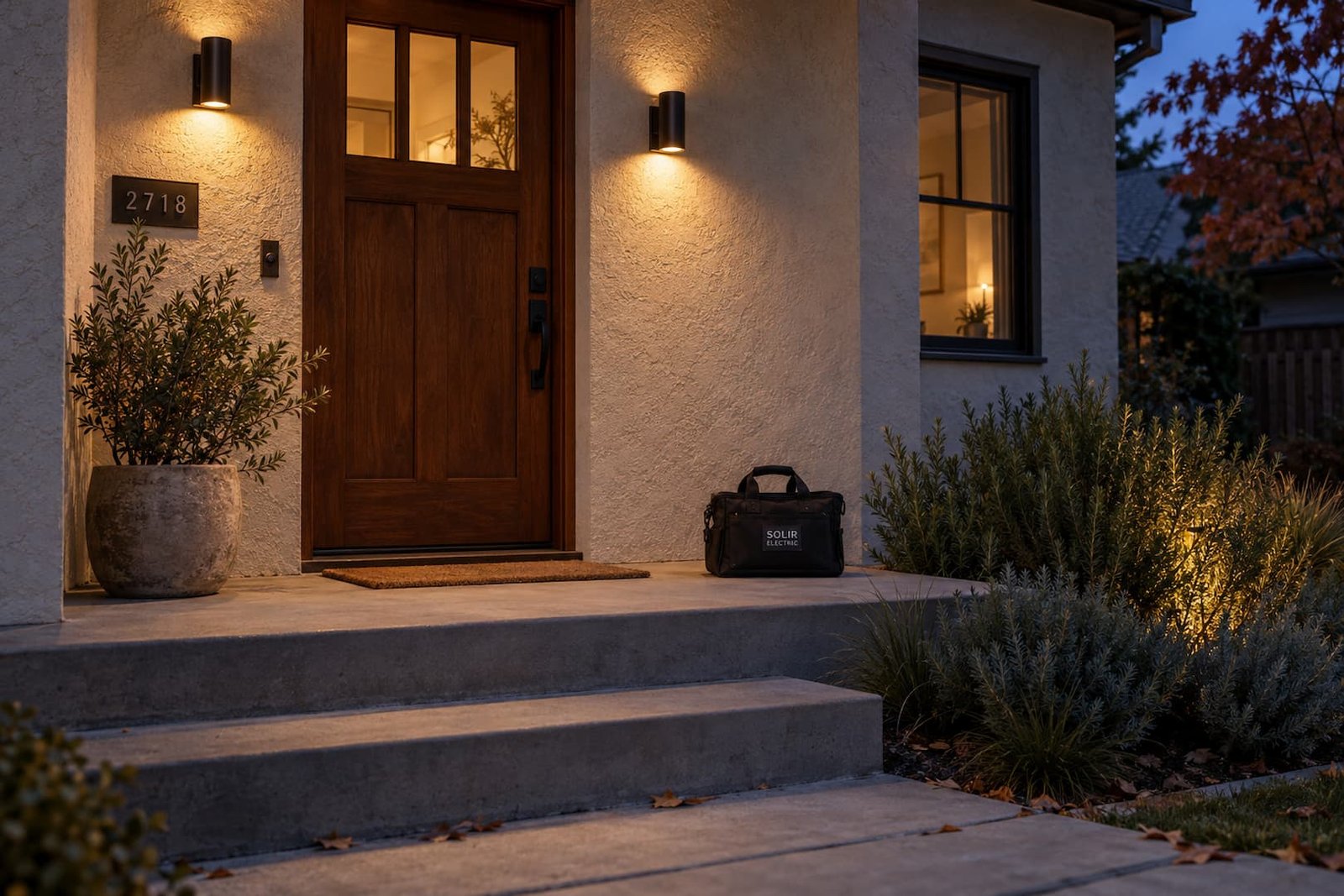
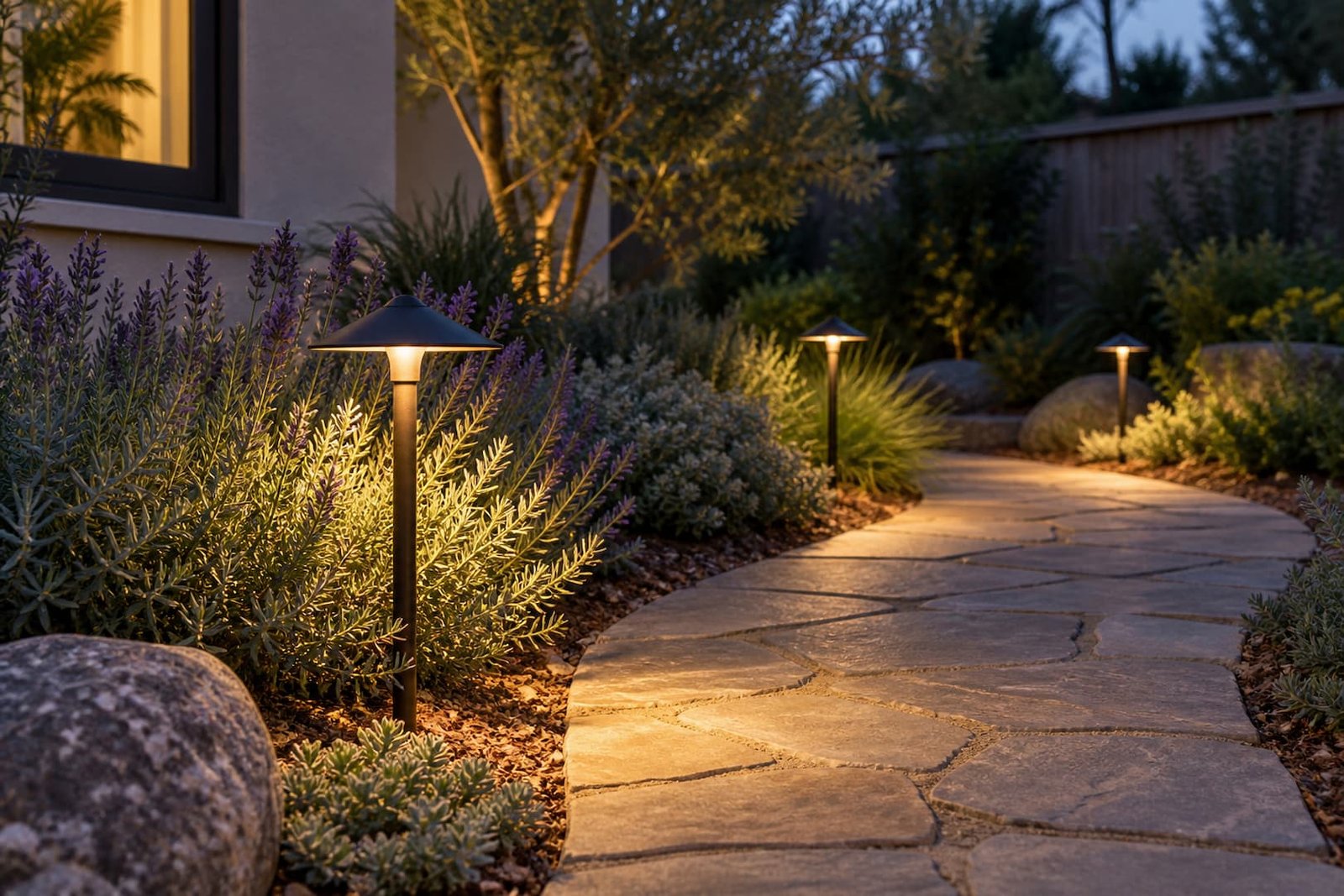
Position light so people can read changes in level and the direction of a path. Fixture spacing follows the beam and site conditions; a row of bright points at eye level can make the walk less comfortable.
Landscape, patio & exterior lighting
Make the walk to the front door clearer, use the patio after sunset, and put light where the yard needs it. Solir Electric installs and repairs outdoor lighting, from a single exterior fixture to a connected landscape layout.
Plan the evening view
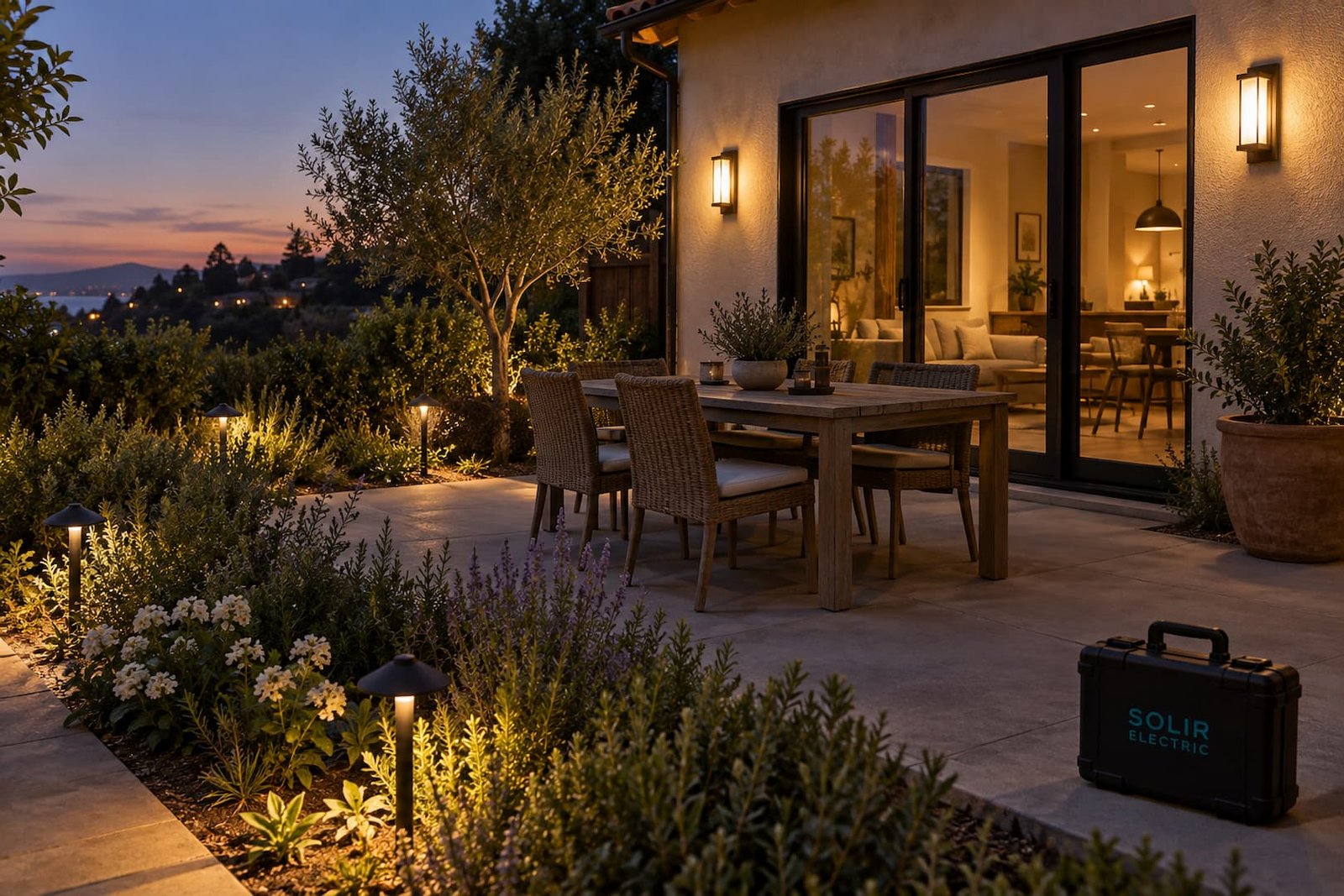
Start with the places you walk through or spend time after dark. The entry path needs visibility. A seating area needs comfortable light. A tree or textured wall may need only a small amount of accent light.
Position light so people can read changes in level and the direction of a path. Fixture spacing follows the beam and site conditions; a row of bright points at eye level can make the walk less comfortable.
Wall fixtures, porch lights and suitable patio lighting can support dining and conversation. We consider doors, furniture and sightlines from inside the house before settling on locations.
Motion-activated or scheduled lighting can illuminate an approach when needed. Aim and sensor coverage matter, especially near neighboring windows, a shared fence or passing traffic.
Low-voltage landscape systems use a transformer to supply compatible fixtures. They suit many paths, planting beds and accent applications. Cable length, the connected load and voltage at the fixtures all influence performance. Expanding a system can require more than adding lights to the end of a cable.
Line-voltage lighting is common at house-mounted fixtures and some area lights. Outdoor boxes, connections and controls must suit the exposure and installation. We check the available supply and protective devices when replacing equipment or extending a circuit.
A new exterior receptacle or switch may belong in the same scope. See our outlet and switch service if that is the main change you need.
A timer or compatible smart control can switch selected zones at set times. The right arrangement depends on the equipment, nearby power and how much control you want from the house. Outdoor wireless controls also need usable signal coverage.
A photocell responds to available light; a motion sensor responds to activity within its detection area. Placement affects both. A sensor aimed at street traffic or a photocell illuminated by its own fixture can behave in ways you did not intend.
If an entire group stops working, the cause may be in its supply, transformer or control. One dark fixture can point to a lamp, connection or local cable issue. Moisture, landscape work and damaged cable can cause intermittent faults.
We check the fixtures, trace accessible wiring and review the control settings. Repair may involve replacing a damaged fitting, locating a failed connection or correcting the load on a cable run. Some older components no longer have practical replacements, so we explain the repair and replacement options.
Repeated tripping should be investigated before the lights are used again. Do not bypass protection to keep the system on. If the problem also affects other circuits, electrical troubleshooting may be the appropriate starting point.
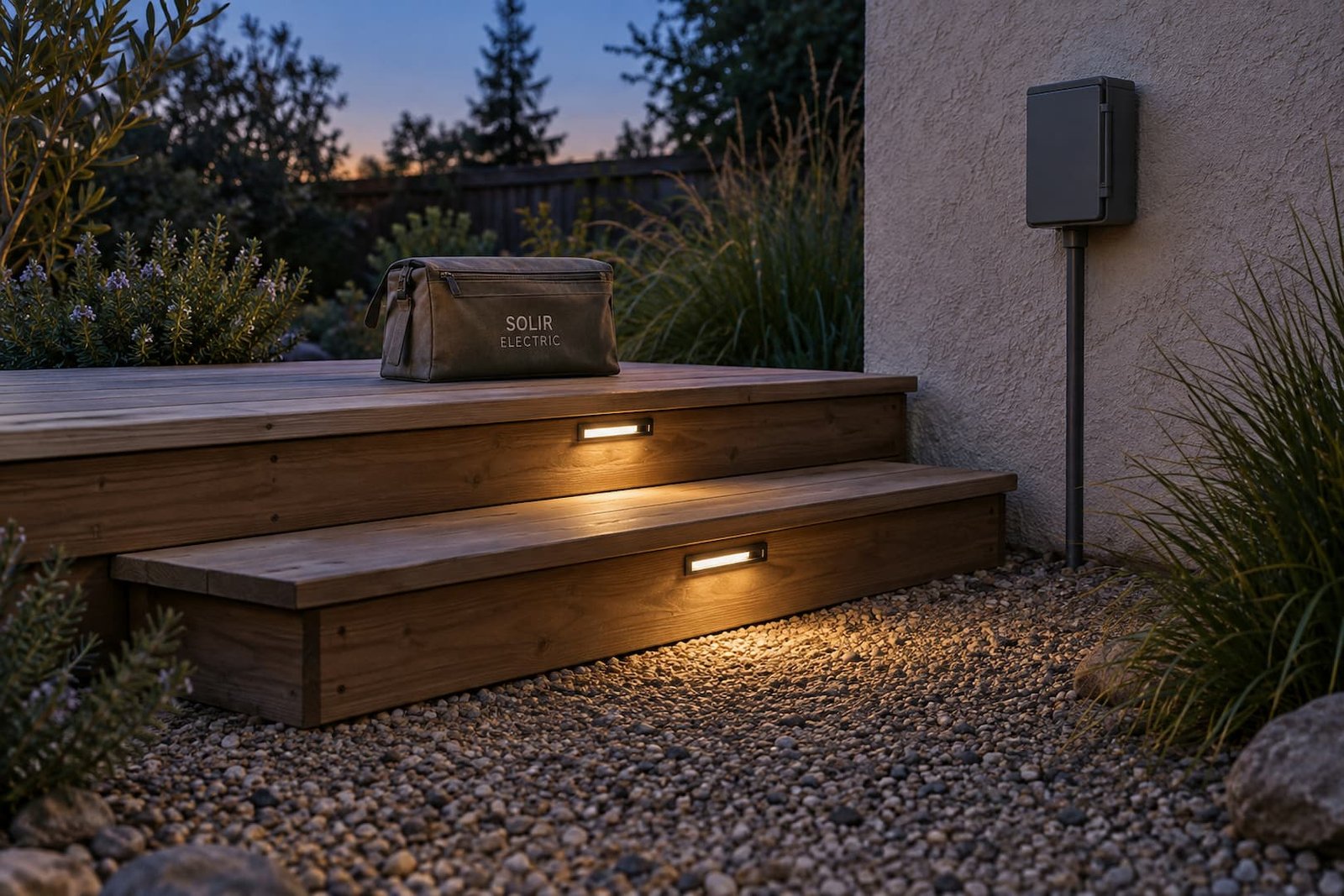
We review the areas you want lit, existing equipment and possible cable routes. The estimate depends on fixture quantity and quality, access to power, trenching, hard surfaces, transformer capacity and control choices. A finished concrete walkway changes the routing options compared with an open planting bed.
Tell us about planned irrigation, planting or hardscape changes. Coordinating the electrical route with that work can avoid reopening an area. The scope should identify any landscape or surface restoration and who will handle it.
Permit requirements depend on the installation and the authority responsible for the property. City of Sacramento, unincorporated County and neighboring cities can have different review processes. Lighting changes may also need to account for applicable energy requirements and property rules.
Send a few daytime photos and mark the areas that feel dark. Request an outdoor lighting estimate or call (916) 776-8689.
Before you book
We can assess the transformer, controls, fixtures and accessible wiring. The age and condition of the equipment, plus replacement-part availability, help determine whether repair or partial replacement makes sense.
It works well for many landscape applications, but the right choice depends on output, location, power access and the fixtures. House-mounted and larger area lights may use line voltage.
Many systems support both. We check how the timer, switch and fixtures work together so the arrangement is clear and convenient to operate.
Fixture shielding, location, beam spread and aiming all help. We review the view from the property edge and use only the output needed for the intended area.
Many wired systems need a cable route below or through the landscape. The route depends on the system, surfaces and applicable requirements. Existing usable wiring may reduce the work.
Often, but the transformer, cable runs and controls need capacity for the addition. Tell us about future phases so the initial layout can take them into account.
Talk to Solir Electric
Tell us which areas you want lit or which lights have stopped working. Mention existing controls and any planned landscape work; those details help us assess the fixtures and possible cable routes.