
Homes and home offices
New Ethernet outlets can give fixed devices a wired path and support access points in useful locations. We discuss rooms, finished-wall access and the route to the router or network cabinet.
A WIRED CONNECTION WHERE YOU NEED IT
A desk, access point or camera needs a dependable path back to the network. Solir Electric installs data and Ethernet cabling in Sacramento homes and commercial spaces, with outlet locations, cable routes and the required handover agreed before installation.
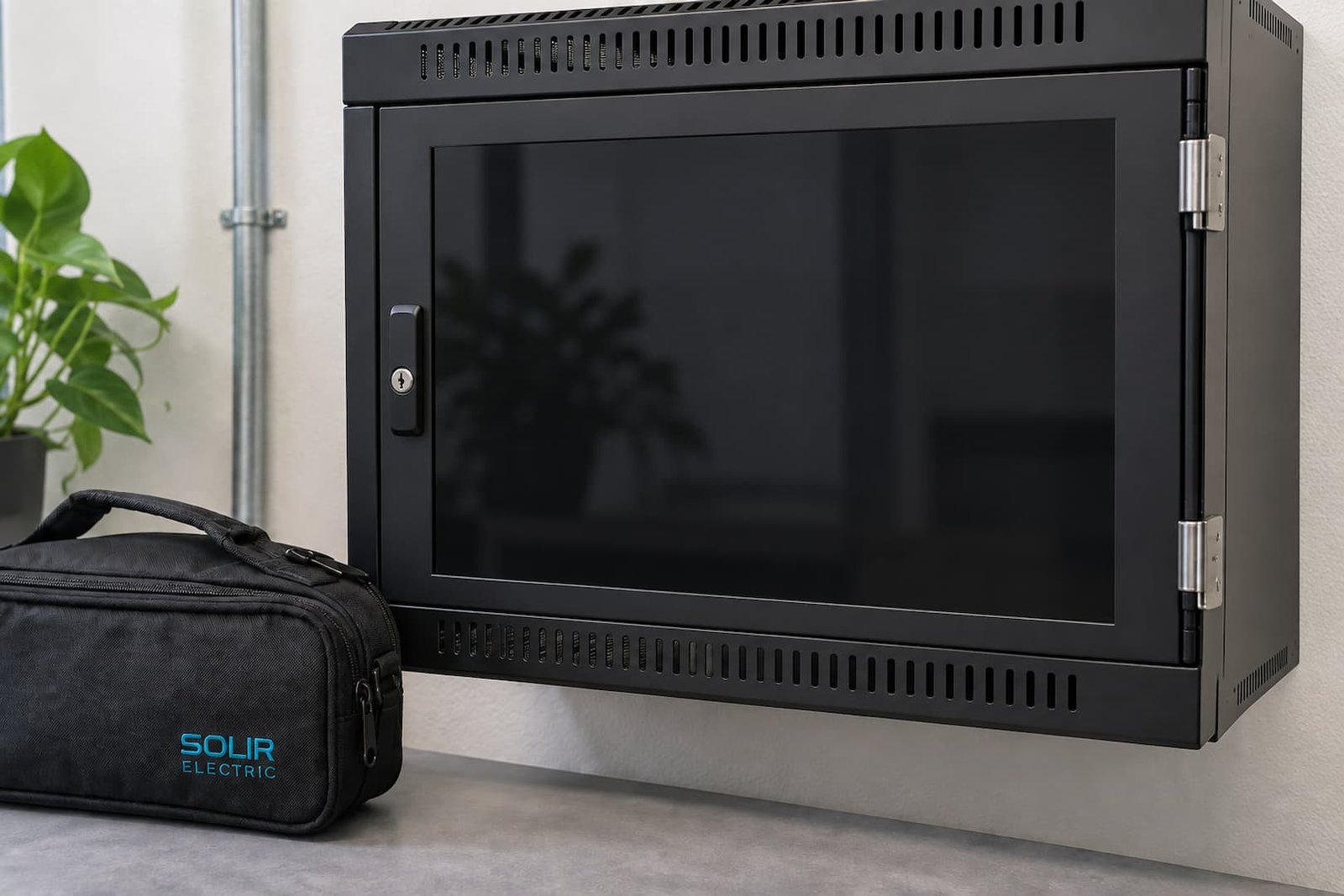
Start with the locations that need a wired connection: workstations, televisions, ceiling access points, cameras or other networked equipment. Then identify where those runs will terminate and which equipment will connect them.
New Ethernet outlets can give fixed devices a wired path and support access points in useful locations. We discuss rooms, finished-wall access and the route to the router or network cabinet.
Desk moves, tenant improvements and new equipment can require additional drops or a reorganized patching area. Plans, desk counts and input from your IT provider help establish the required connections.
Cat6 and Cat6A are common options for new copper cabling, but category is only part of the decision. Link distance, installed connectors, routing conditions and the network application affect the choice.
For Power over Ethernet devices, the switch or injector must provide compatible power. Camera, access-point and other device requirements should be checked alongside the cable plan. A working data link does not prove that every device has the power it needs.
Connections between separate buildings can introduce distance, grounding and exposure considerations. They deserve a site-specific route and media discussion rather than an assumption that an ordinary indoor cable can simply be extended outdoors.
If an IT provider has specified a cable category, number of drops, patch-panel arrangement or testing requirement, share it before the estimate. We can then define the physical installation around that specification and identify anything that needs further design.
Existing wall cavities, accessible ceilings and conduit can provide a route, but the practical options depend on the building. In finished areas, surface raceway may be appropriate where a concealed run would require substantial opening of the walls.
We discuss outlet height, plate style, the patching location and any finish work before installation. The route also needs to account for power wiring, environmental exposure and the appropriate cable rating for the space.
Tell us about landlord rules, access above ceilings and areas that cannot be interrupted. Where the work crosses rated assemblies, restoration requirements need to be included in the installation scope.
Clear labeling helps identify which outlet goes to which termination. It also makes later moves and troubleshooting easier for the owner or IT provider.
Agree the labeling scheme and documentation at the start. A simple home office and a multiroom commercial installation may need different levels of detail.
Basic connection checks, application qualification and standards certification answer different questions. A wiremap check can find connection errors; it is not the same as certifying the installed link to a category standard.
If the project specification requires certification results or a manufacturer-backed cabling warranty, say so before work is priced. The agreed scope must account for the testing equipment, method and documentation that requirement needs.
We discuss the handover with the owner or IT contact so a completed cable installation is not confused with a fully configured network. Switch setup, cybersecurity, Wi-Fi configuration and internet-provider work need their own responsibilities defined.
Drop count, cable length, access, terminations, pathways and the required testing affect cost. An accessible ceiling can make a run straightforward; a finished multistory route may need more labor and coordination.
Existing cabling can sometimes be reused after its condition and suitability are assessed. Old outlet labels or the printing on the cable alone do not confirm that the whole installed link meets the new requirement.
For the first conversation, send a simple floor plan or room list, the device locations and the central connection point. Include any planned expansion, PoE devices and requirements from an IT provider. Solir Electric can then discuss the cable installation and the work needed around it.
Before you book
Yes. We can discuss a single outlet as well as larger cabling projects. The route from that room to the router, switch or patching area determines the installation work. Let us know whether concealed wiring is important.
It can improve the connection between a device and the local network when Wi-Fi is the limitation. It will not change the speed supplied by your internet provider or fix every router or device problem. The cause should be distinguished before work is chosen.
The intended network application, distance, routes and equipment requirements guide the choice. Send any specification from your IT provider. A more demanding application can justify a different installation, but the cable label alone does not establish end-to-end performance.
Yes. We can discuss data runs to those locations, with power requirements checked against the switch or injector and device models. Access-point or camera configuration should be identified separately in the project scope.
Possibly, if the cables, terminations and routes are suitable for the intended use. We assess the existing installation and the required testing. A jack that looks intact may still need repair, retermination or replacement.
The required test level is agreed during scoping. Basic verification and standards certification are different services. If certification reports or a manufacturer warranty are required, include that specification so the testing and handover can be arranged appropriately.
Talk to Solir Electric
List the rooms and devices that need a wired connection, plus the router or network cabinet location. Mention any PoE devices and the cable, labeling or testing requirements your IT provider has specified.