
New or relocated equipment
We review the available distribution system, proposed location and required connection. The scope may include feeders, branch circuits, disconnects, grounding and changes to the existing electrical layout.
ELECTRICAL WORK AROUND YOUR OPERATION
A new machine, a relocated production line or an electrical fault starts with the equipment and the way your facility operates. Solir Electric installs and repairs industrial electrical systems in Sacramento, with the work scope, access and shutdown requirements established before scheduling.
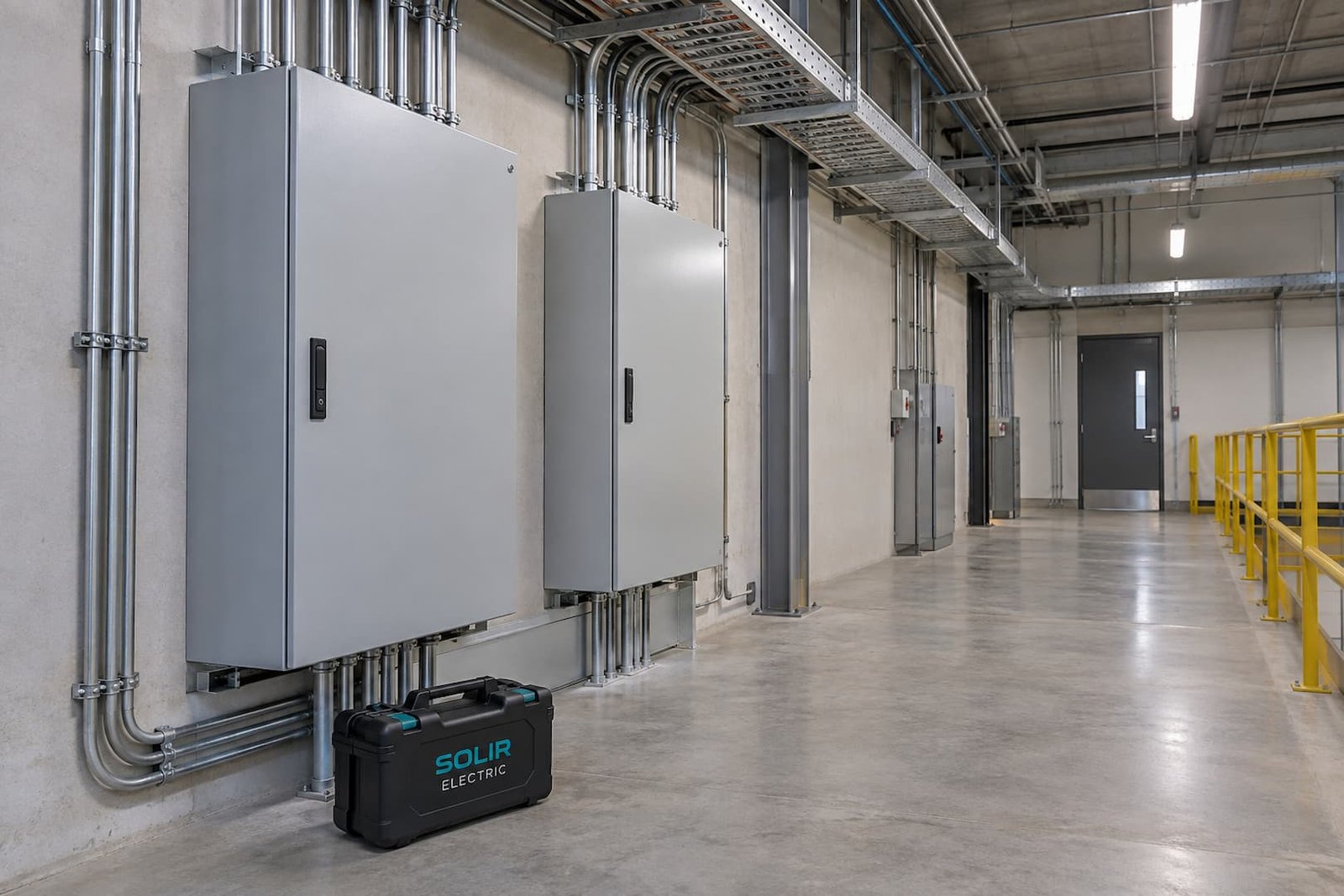
Equipment drawings and nameplate information are more useful than the size of the machine or the nearest available outlet. Supply voltage, phase, starting demand and the manufacturer’s connection requirements shape the electrical work.
We review the available distribution system, proposed location and required connection. The scope may include feeders, branch circuits, disconnects, grounding and changes to the existing electrical layout.
A machine stopping or a protective device opening needs diagnosis. We discuss whether the fault appears in the supply, distribution, connection or equipment controls and identify the work that can be assessed.
Industrial electrical work can affect people, machinery and connected processes beyond the immediate work area. The site contact needs to identify what can stop, which loads must remain available and who has authority to approve an interruption.
We discuss access, isolation boundaries and the sequence of work with the facility representative. That includes any alternative power sources or stored energy associated with the equipment. Site procedures and the work scope determine the required coordination before work begins.
Which equipment is affected? Who shuts down the process? What needs to be verified before restart? When can the area be released for work? Clear answers help define a realistic schedule without promising that every job can happen while the facility remains fully operational.
Industrial equipment may use single-phase or three-phase power, with requirements that differ from an ordinary building outlet. Available service capacity, protective devices and the distribution route must support the proposed installation.
Motor starting, simultaneous operation and sensitive equipment can affect the assessment. A repeated trip is not a reason to increase a breaker rating without checking the cause and the circuit it protects.
Dust, moisture, heat, washdown areas and physical exposure also matter. Tell us about the operating environment so the project can establish the appropriate equipment, enclosure and wiring requirements. Hazardous or specially classified areas need their classification and design requirements identified at the outset.
| Part of the project | What to establish |
|---|---|
| Building supply and distribution | Available capacity, circuit and feeder requirements, routes and electrical protection. |
| Equipment connection | Manufacturer instructions, disconnect location, access and the final connection point. |
| Machine controls and software | Whether the machine supplier or controls specialist must diagnose, program or commission the equipment. |
| Engineering and approvals | Any required drawings, calculations, reviews, testing and the party responsible for each. |
| Restart and handover | The agreed checks, operating restrictions and the facility contact who accepts the work. |
Circuit distance, conductor and equipment requirements, access height, working space, existing distribution condition and the shutdown window all affect the estimate. Cable routing through an occupied facility can require more planning than an equivalent run in an empty building.
Permits and plan review depend on the project and jurisdiction. Work involving the utility service or substantial distribution changes may require additional coordination. We identify those dependencies while defining the proposed electrical work.
For an initial enquiry, provide the facility address, a description of the process, relevant equipment documents and your target schedule. Tell us whether this is a repair, an expansion or a planned relocation. A facilities or maintenance contact who knows the system can help clarify access and operational constraints.
Solir Electric holds California C-10 electrical contractor license #1109744. Any project-specific credentials, testing requirements or manufacturer authorizations should be discussed against the actual specification.
Before you book
We can assess the electrical work for new or relocated equipment. Send its installation requirements and the proposed location. The available supply, equipment specifications and site conditions determine the connection scope and any required upgrades.
Three-phase requirements can be included in the project assessment. We need the actual voltage, load and manufacturer information, together with the existing distribution details. A three-phase machine cannot be assumed compatible with any available three-phase supply.
We can discuss a planned shutdown and the required work sequence. Timing depends on scope, access, equipment availability and coordination with the facility. Confirm the operating constraints early rather than treating the shutdown date as the only scheduling requirement.
We can investigate the electrical supply and connection as part of an agreed diagnostic scope. A fault inside the machine or its controls may require the manufacturer or a specialist. The first step is to establish where the fault lies.
Some projects require engineered documents, calculations or specialist testing. Commercial and industrial approval requirements depend on the proposed work. The responsibilities should be identified before installation, including any design services that need separate coordination.
Those tasks can be discussed alongside equipment power work. Coordinating access and routes may be useful, but lighting, power and data have different requirements. We define each part of the installation so the scope and handover are clear.
Talk to Solir Electric
Describe the equipment change or electrical fault and include the model if known. Tell us what must remain operating during the work. If the machine supplier needs to be involved, mention that requirement and the person coordinating the project.