
Entrances and deliveries
Discuss the area where people approach, stand and leave packages. A camera aimed too high or mounted behind an obstruction may show activity without capturing the detail you wanted.
A CLEAR VIEW, WITH THE CONNECTIONS TO SUPPORT IT
Decide what you need to see at an entrance, driveway or business area. Solir Electric installs security cameras and the associated wiring in Sacramento, with camera placement, power and network requirements planned for the property and selected equipment.
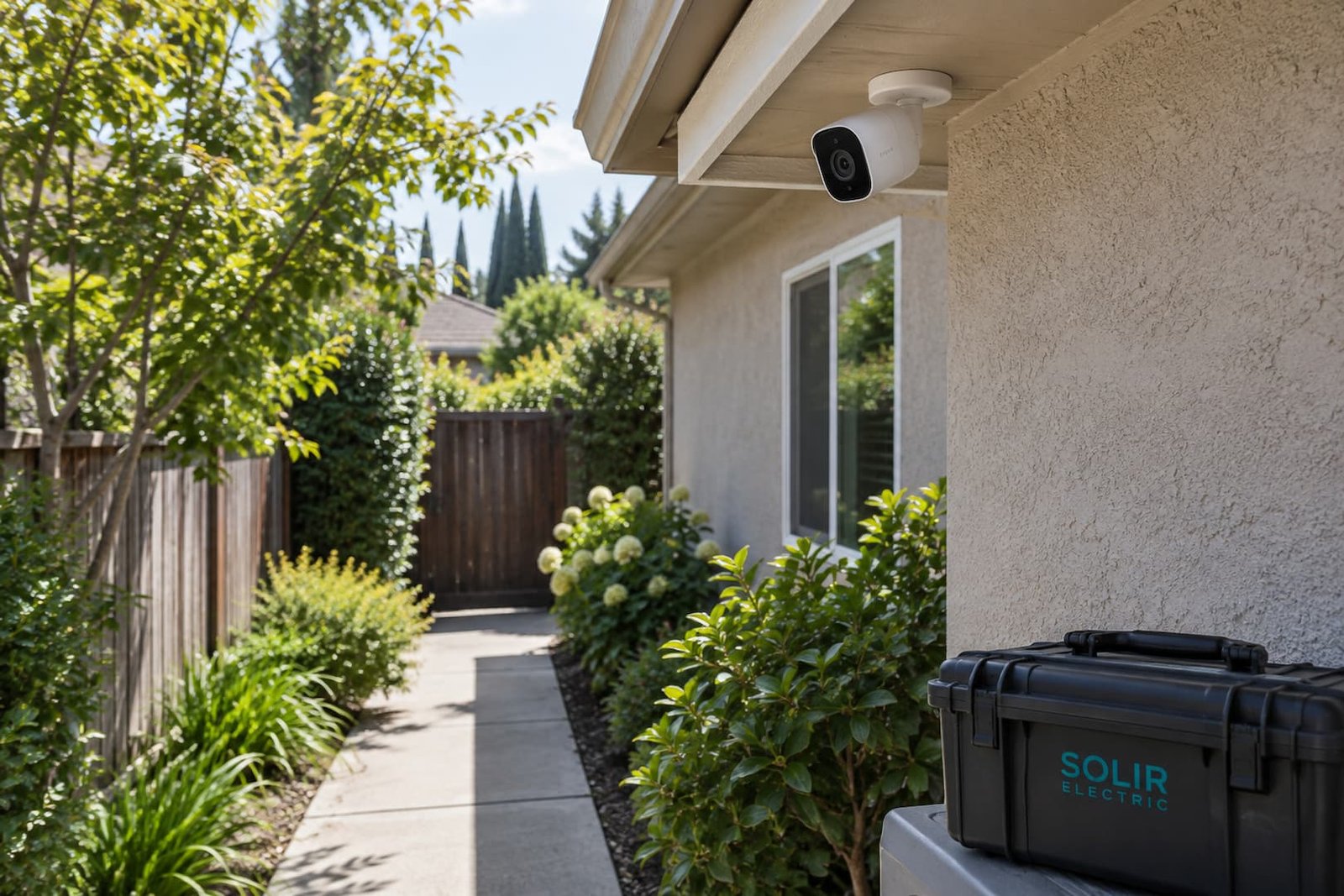
An overview of a yard and a useful view of a visitor at the door are different jobs. Camera position, lens choice, mounting height and lighting affect what the image can show.
Discuss the area where people approach, stand and leave packages. A camera aimed too high or mounted behind an obstruction may show activity without capturing the detail you wanted.
Coverage needs to account for parked vehicles, lighting changes and the limits of the property. A broad view can help observe activity, but it does not guarantee readable plates or detailed identification at every distance.
| Equipment arrangement | Installation considerations |
|---|---|
| Power over Ethernet cameras | Compatible PoE switch or recorder, cable route, device power needs and network connection. |
| Wi-Fi cameras with a power connection | Suitable power at the mounting point, reliable wireless coverage and weather protection where needed. |
| Battery-powered cameras | Access for charging or battery changes, wireless signal and the product’s operating limitations. |
| Existing wired camera system | Cable type and condition, power supply, recorder compatibility and the suitability of each retained component. |
Bright doorways, vehicle headlights and dark corners can make a scene difficult even for a high-resolution camera. Nearby walls, glass and reflective surfaces can also affect infrared night images.
We discuss the camera position and available lighting so the installation suits the intended view. Camera specifications do not guarantee the same image quality in every location. Where a particular identification or low-light performance target matters, make it part of the equipment selection and agreed checks.
During the agreed setup checks, confirm that the important area is visible and that obstructions do not defeat the purpose of the camera. A wide view and a detailed view may require different positions.
For higher mounting points, plan future access as well. Cleaning, adjustment or replacement can require equipment that is not needed for a door-height installation.
Some systems record to a local network video recorder; others rely on cloud services, removable storage or a combination. Retention, remote viewing and alerts depend on the equipment, storage capacity, settings and any subscription.
Agree who owns the camera system and administers its accounts. The property owner should control credentials and user permissions. Avoid sending passwords in a service request; any setup assistance can be arranged through an appropriate owner-controlled process.
A camera installation does not automatically include ongoing monitoring, a cloud plan, cybersecurity administration or emergency dispatch. We discuss the wiring, mounting, connection and commissioning tasks included in the project so those expectations are clear.
Camera quantity is one factor. Mounting height, cable distance, finished-wall access, network equipment, power supplies and weather exposure also affect the work. Reusing existing cables depends on their condition and compatibility with the proposed system.
For a business, tenant access, opening hours and the location of the recorder or network cabinet need to be planned. The IT provider may need to prepare switch ports or network settings, while the property manager arranges access and any required approvals.
Send the address, a list of the areas to cover and the selected camera models if you have them. Photos of the proposed locations or an existing plan can help with the initial discussion. Solir Electric can then assess the installation requirements and identify the next step toward a workable layout.
Before you book
We can review the equipment and proposed locations before confirming the installation scope. Send the exact models and details of any recorder, power supply or PoE switch. Compatibility and mounting requirements need to be checked as a complete system.
The right choice depends on routes, wireless coverage, power availability and the intended use. Wired data can suit fixed locations with accessible pathways. Wi-Fi still needs a reliable signal and, for many models, a separate power connection.
Sometimes. The cable type, condition, distance and new equipment requirements determine whether reuse makes sense. We assess those details before treating an existing cable or connector as suitable for a replacement camera.
That depends on the system. Some local recording arrangements can continue without an internet connection, while remote access and cloud features may stop. Power also needs to remain available. Review the intended outage behavior for the selected equipment.
Those services are not implied by the electrical installation. The property owner selects any recording or monitoring service and its terms. We discuss the mounting, wiring and agreed connection or setup work as part of the installation scope.
No general camera installation can make that promise. Plate capture depends on equipment, distance, angle, lighting and vehicle movement. If it is a specific requirement, identify it before choosing cameras so an appropriate system and scope can be considered.
Talk to Solir Electric
List the areas you want to see and the camera models, if selected. Tell us about any existing recorder or cabling and where equipment can be mounted; keep passwords and account credentials out of your message.