
Panels and mounting
The array collects sunlight. Panel position, shade and mounting details influence how it performs and how it fits the roof. Access routes and required clearances remain part of the layout.
SOLAR THAT FITS THE PROPERTY
Your roof, electricity use and utility service all shape a solar installation. Solir Electric installs solar panels for Sacramento homes and business properties, including the building connection, electrical equipment and options for battery storage.
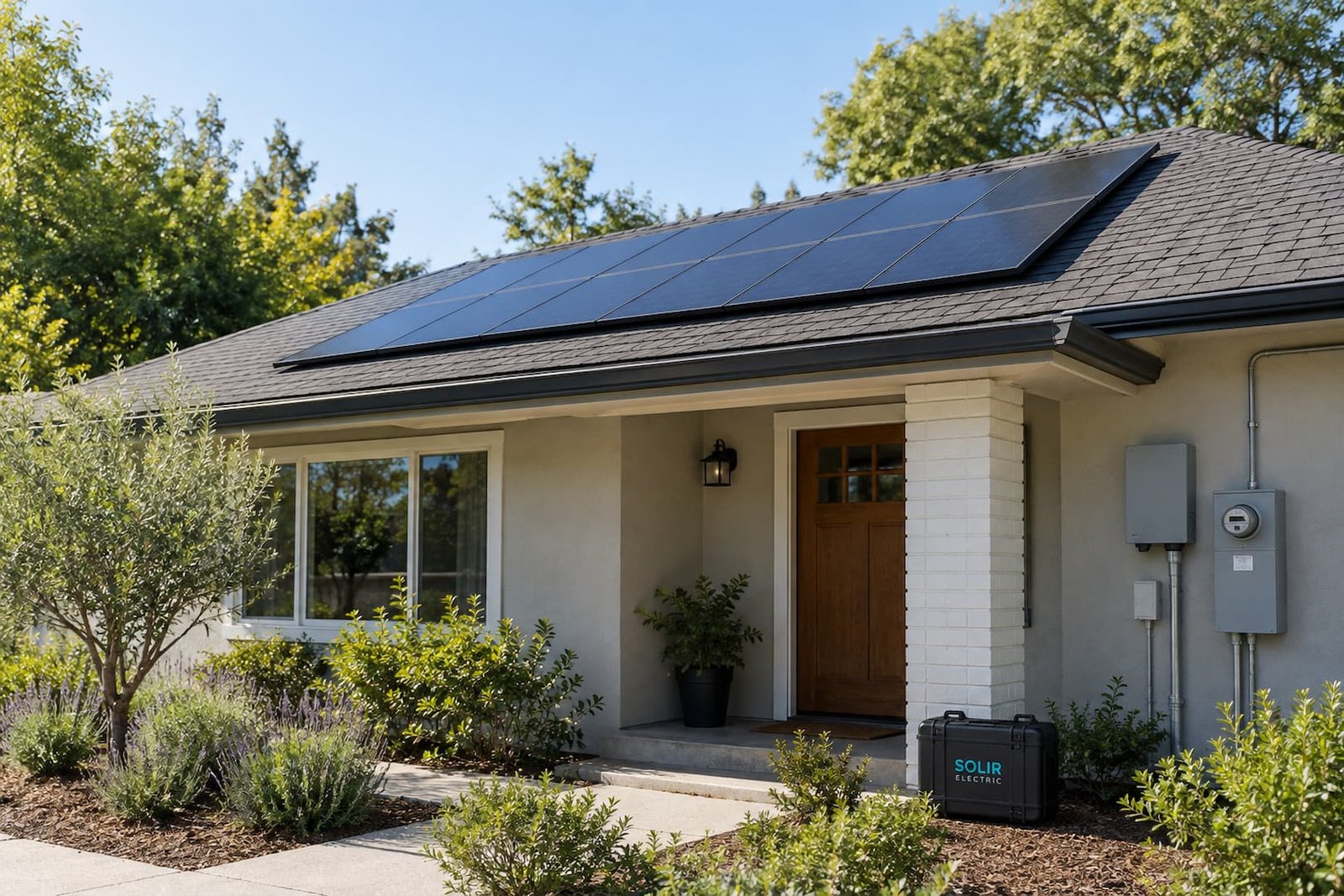
Roof area alone does not determine system size. Orientation, shading and usable space affect the layout. Roof condition matters too: installing panels shortly before roof replacement can add avoidable removal and reinstallation work.
We discuss the property, review available usage information and identify the electrical connection requirements. Tell us about planned additions such as a heat pump, electric range or EV. Future demand can change the design, while a large system is not automatically the best fit for the applicable utility rate.
Property access, the location of existing service equipment and any roof work need to be considered together. The proposal should identify responsibility for roof assessment and any structural or repair work before installation.
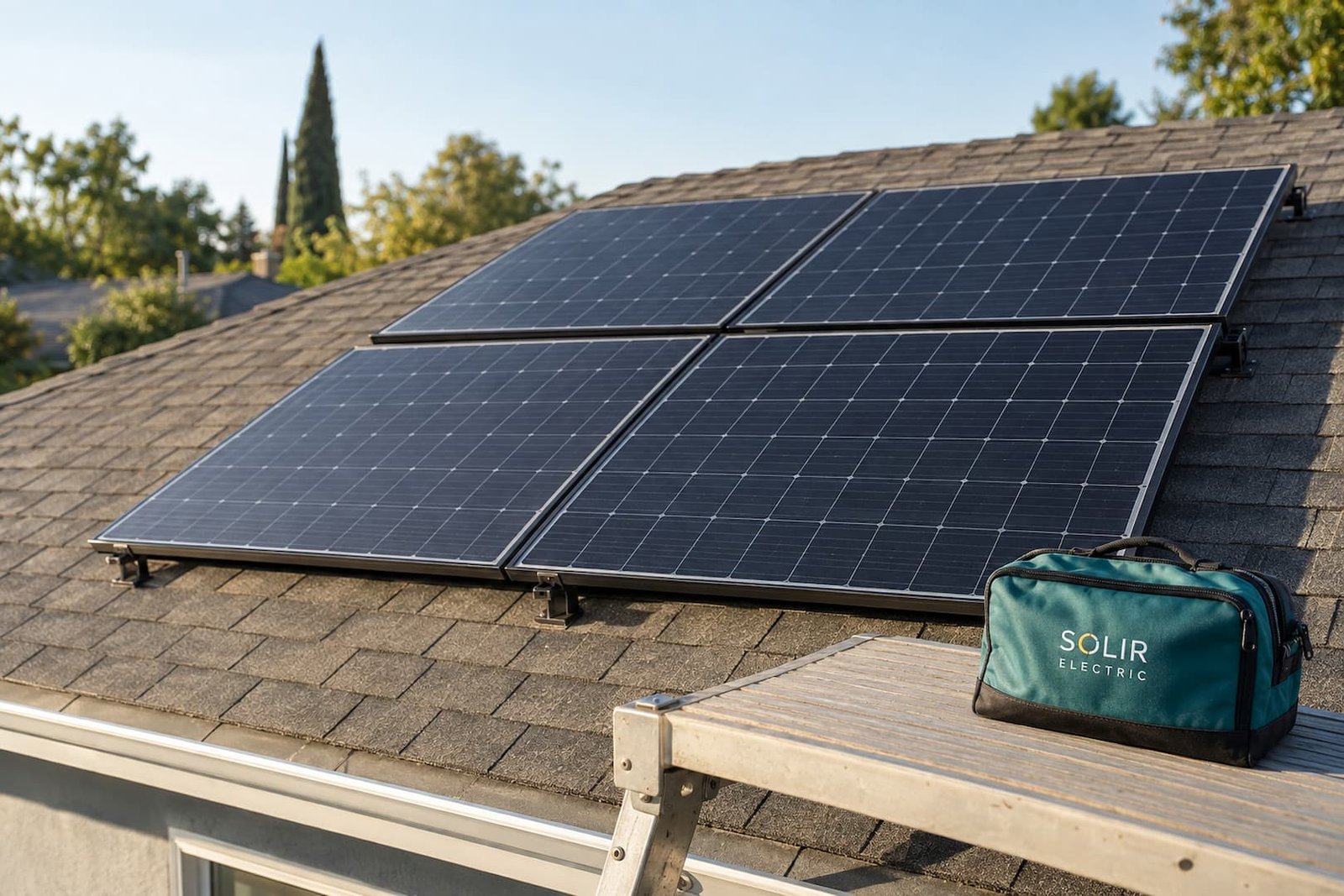
The array collects sunlight. Panel position, shade and mounting details influence how it performs and how it fits the roof. Access routes and required clearances remain part of the layout.
Inverter equipment converts the solar output for use by the building. The chosen architecture, wiring and service connection must work with the property and the utility requirements.
Monitoring helps you see system operation. A compatible battery can store energy for later use and, with the appropriate backup design, supply selected loads during an outage.
A grid-connected solar project needs the relevant permits, inspections and utility interconnection process. Completing the physical installation does not by itself authorize the system to export electricity or operate in parallel with the utility.
The correct process depends on your address and electricity provider. In SMUD territory, the Solar and Storage Rate and interconnection requirements affect new systems and some changes to existing systems. Other utilities have their own tariffs and approval procedures.
We discuss the electrical connection, service equipment and any required changes during project planning. The estimate should state who submits the applications and what remains dependent on inspection or utility approval. Equipment delivery and those review stages influence the full schedule.
For SMUD customers, review the current Solar and Storage Rate before relying on an export-credit or savings estimate. A larger array does not necessarily produce a proportionally larger bill reduction.
An office, shop or warehouse can use much of its electricity while the sun is available, but the actual load profile matters. Send recent utility information and operating hours, including planned equipment or EV charging. Those details help compare on-site consumption, exported generation and possible storage.
Commercial solar planning also brings the building owner, tenant and roof responsibilities into the project. We review the electrical connection and available distribution information alongside access, shutdown windows and any required design work. Rooftop equipment, maintenance routes and structural assessment need coordination before the array layout is settled.
For a property supplied by SMUD, its commercial interconnection guidance identifies the application process. The proposal needs to account for that process, the applicable business rate and any engineering or roof work required for the site.
Most conventional grid-connected solar systems shut down during a utility outage. That protects the utility connection; sunlight alone does not make the house a backup-powered building.
If outage power matters, discuss battery storage and the circuits you want backed up while the solar system is being designed. Isolation equipment, inverter compatibility and the available battery output all affect that arrangement.
Existing solar introduces another set of questions: inverter capacity, available monitoring records, equipment age and the original interconnection approval. A modification can affect the applicable rate or require a new utility application.
Send the original plans and equipment models if you have them. They help establish what can be retained, what needs to change and whether storage can be added to the present system.
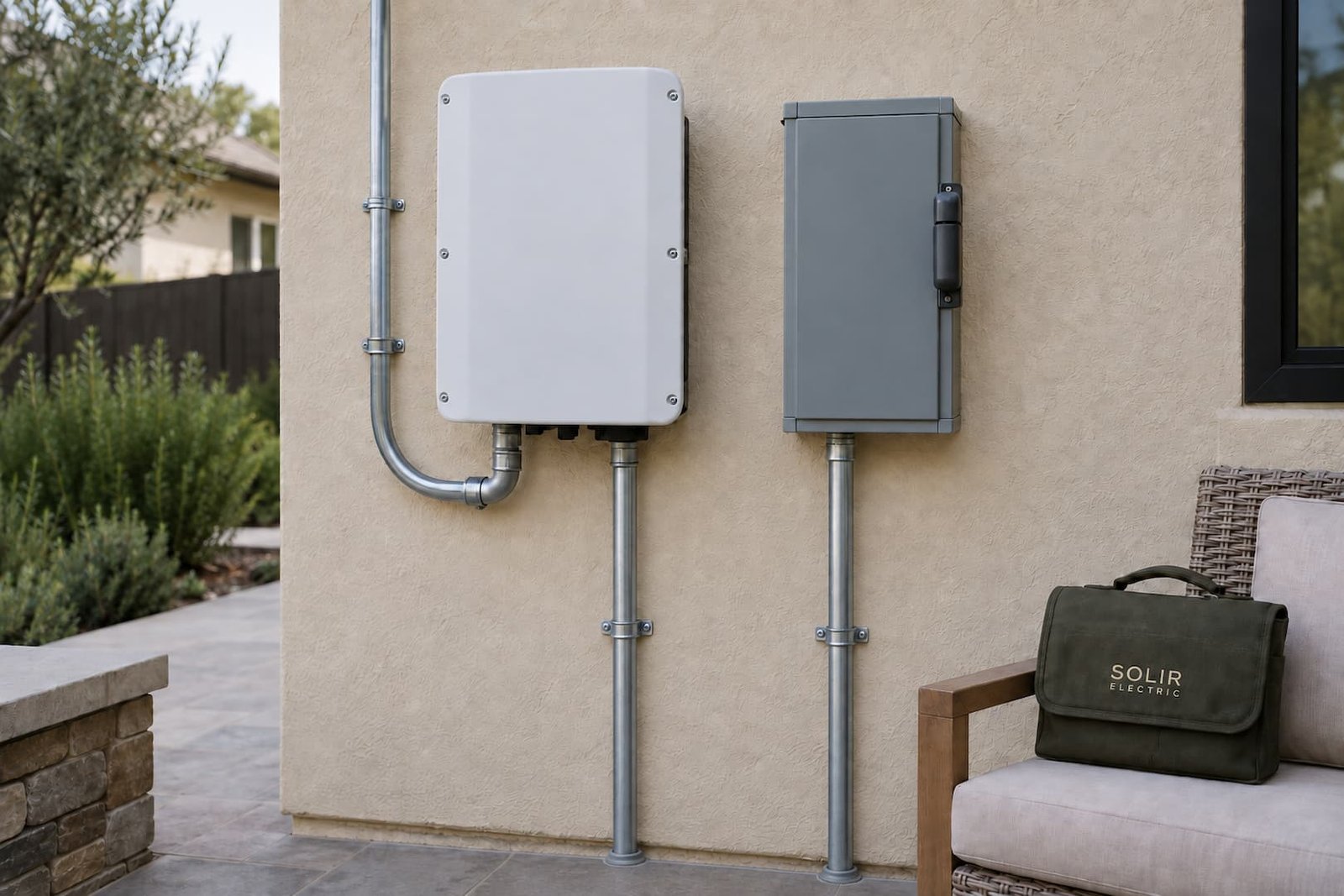
Useful scope includes the array and inverter equipment, mounting, wiring route, service connection, monitoring and approval responsibilities. Roof access, panel changes, storage and surface restoration can affect the total installation cost.
Expected output should be presented with its assumptions, including shade and the proposed layout. Financial estimates also depend on the utility rate and when the property uses electricity. Compare those assumptions, any continuing utility charges and the current incentive terms alongside the installation price.
To begin, share the property address, roof information, recent electricity use and any equipment you plan to add. We can then discuss the installation requirements that matter for your property.
Before you book
Not every solar installation needs a panel replacement. The existing service, equipment ratings and proposed connection determine the work. We assess the actual electrical arrangement rather than assuming that panel age or open breaker spaces answer the question.
A standard grid-connected system usually cannot. Outage operation requires a compatible backup arrangement with the necessary isolation and controls. A battery can form part of that design, with limits based on output and stored energy.
If the roof needs near-term work, resolve its condition before committing to the array. The roof assessment and expected work should be discussed with the appropriate roofing professional. Panel removal and reinstallation add scope later.
The physical work is one stage. Design, permits, equipment availability, inspection and utility authorization also affect timing. We discuss those dependencies for the proposed project instead of quoting one completion period for every property.
Compatibility depends on the battery, inverter and control equipment. Share the existing system models and documentation so the connection can be reviewed. Equipment from different manufacturers or generations does not automatically work together.
Savings depend on production, when the property uses power, the utility rate and how exported energy is credited. A useful projection states those assumptions. Installation alone does not guarantee an incentive, a payback period or a particular bill reduction.
Talk to Solir Electric
Tell us about the roof, electricity use and utility serving the property. Mention any existing solar or battery equipment and whether outage backup is part of the plan so those requirements enter the discussion early.