Knob and tube wiring is an older system of separate insulated wires supported on porcelain knobs and protected by porcelain tubes where they pass through wood. Finding it calls for an electrical assessment. The first questions are whether the wiring is still connected, what it supplies, and whether its insulation or connections have deteriorated.
A house can have a modern electrical panel and still contain active knob and tube circuits. It can also have disconnected remnants from an earlier rewire. Neither the age of the house nor one photograph settles the difference.
What does knob and tube wiring look like?
The distinctive parts are small ceramic supports attached to framing and hollow ceramic sleeves through framing members. Individual cloth-covered wires travel between them, rather than several conductors being enclosed together in one modern cable jacket. The U.S. Department of Energy’s weatherization glossary describes the conductors as insulated copper and places widespread use from the 1880s through the 1930s. Installation dates varied, so use the construction date as a clue, not an identification test.
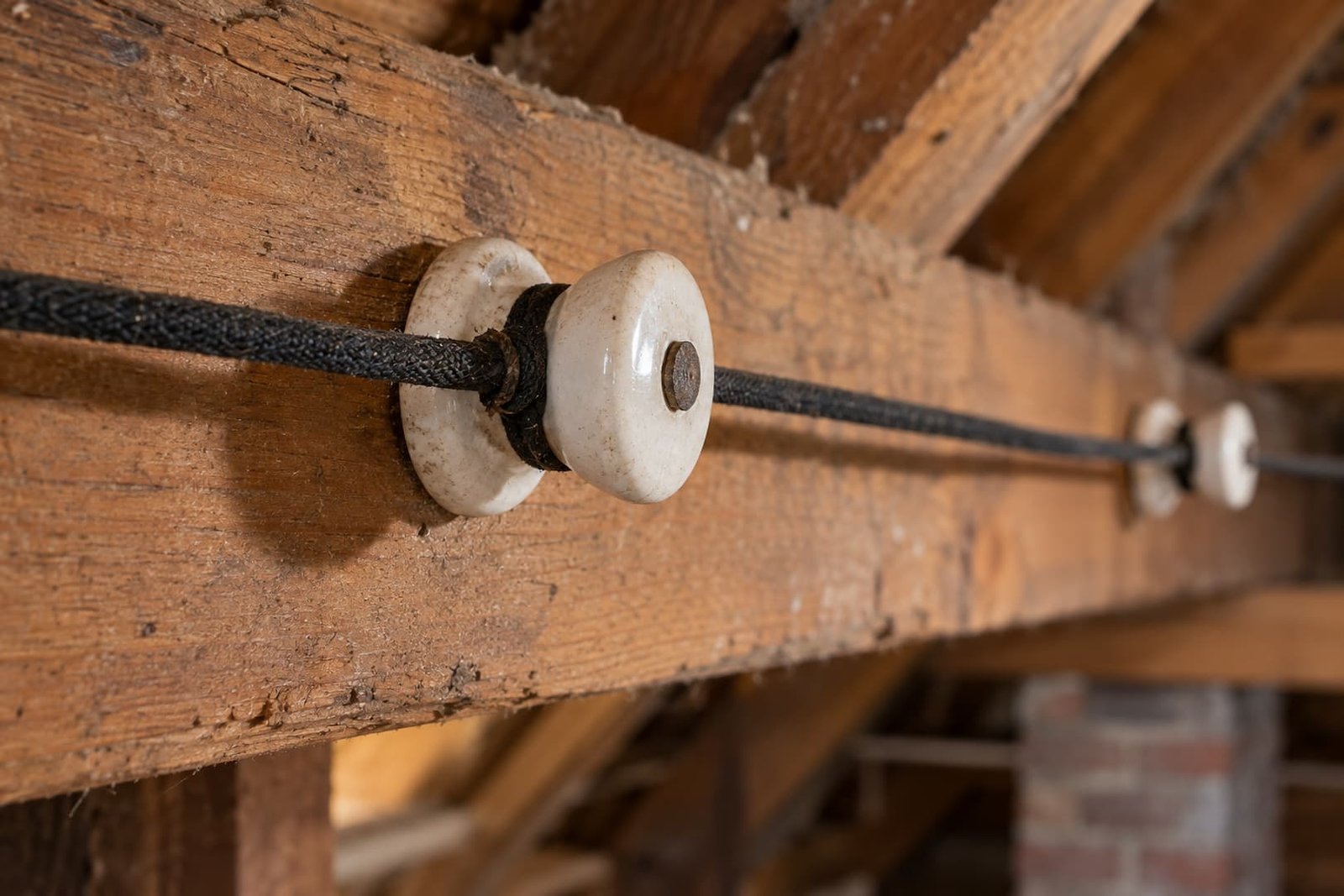
Cloth covering alone does not identify knob and tube. Other older cable types also used woven coverings. Look at existing inspection photographs and renovation records first. Do not pull wires, scrape insulation, remove electrical covers, or enter an unsafe attic to investigate.
| What you have found | What it tells you | What remains to be checked |
|---|---|---|
| Ceramic knobs or tubes | Historic wiring hardware is present. | Whether associated conductors remain connected. |
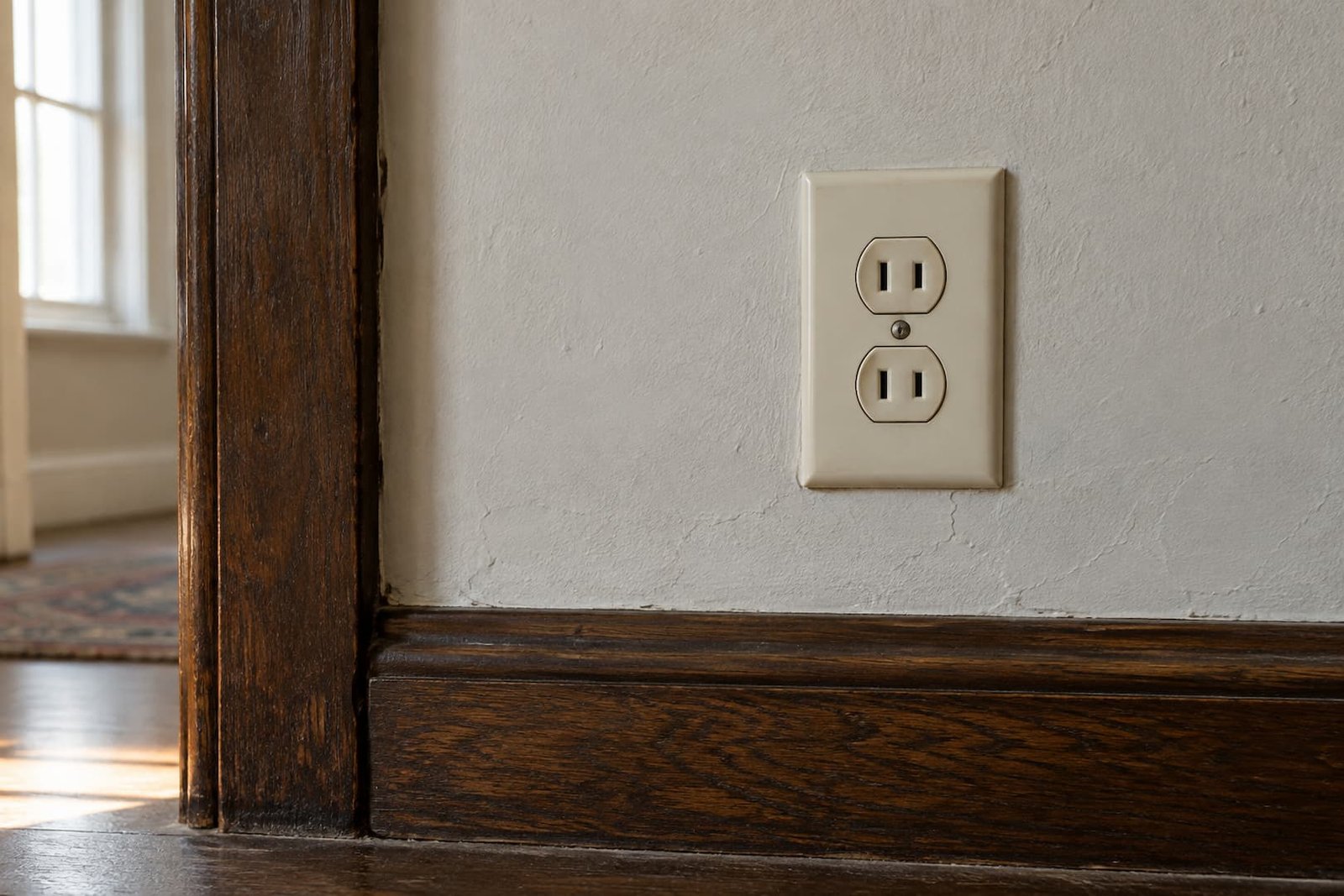
| Two-slot receptacles | The receptacles lack a grounding contact. | The wiring method and condition behind them. |
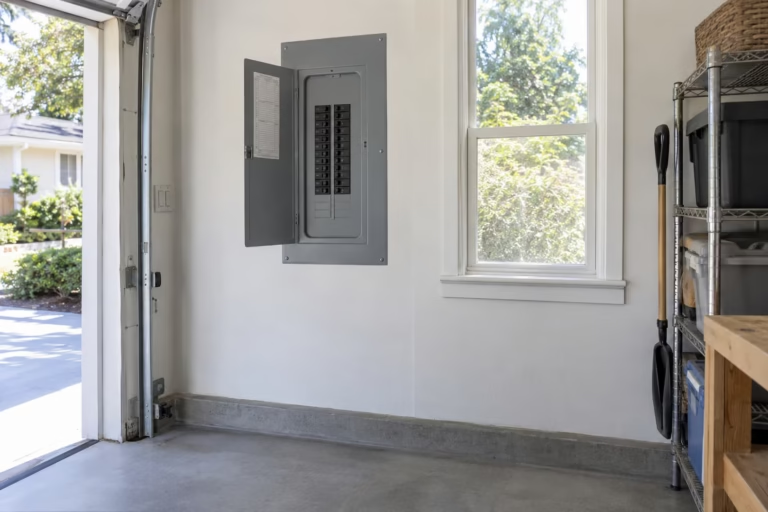
| A newer breaker panel | The panel was installed or replaced later. | Whether the branch circuits were replaced too. |
| New cable in part of the attic | Some wiring has been added or replaced. | Whether older circuits remain elsewhere. |
Why an electrical inspection matters
The electrician needs to check what has happened to the wiring over the years: brittle insulation, damaged conductors, poorly made additions, unsuitable protective devices or connections concealed by later work. A lamp that turns on tells you little about those conditions. A home inspection may flag the wiring type without tracing the full electrical system.
Ontario’s Electrical Safety Authority recommends a dedicated electrical assessment when knob and tube is present, including a check for deterioration and damage. Its Ontario code guidance does not determine what Sacramento permits. The useful distinction is between spotting old wiring and assessing its condition and extent.
Arrange prompt help if there is a burning odor, unexplained flickering, crackling, scorching or a shock. Stop using the affected equipment and do not touch a damaged outlet or wire. For smoke or fire, leave the area and call 911. ESFI’s home wiring guidance lists electrical warning signs that need professional attention.
Can old wiring be live even if the room has no power?
Yes. A dead light or receptacle does not prove that every nearby conductor is disconnected. The electrician must identify the circuit and verify its condition with appropriate testing. Treat exposed old wiring as potentially energized until a qualified professional has established otherwise.

Knob and tube, grounding and two-prong outlets
Traditional knob and tube circuits do not include an equipment grounding conductor. Adding a receptacle with a third hole does not create that missing path. Nor does a new panel automatically provide grounding to every older branch circuit.
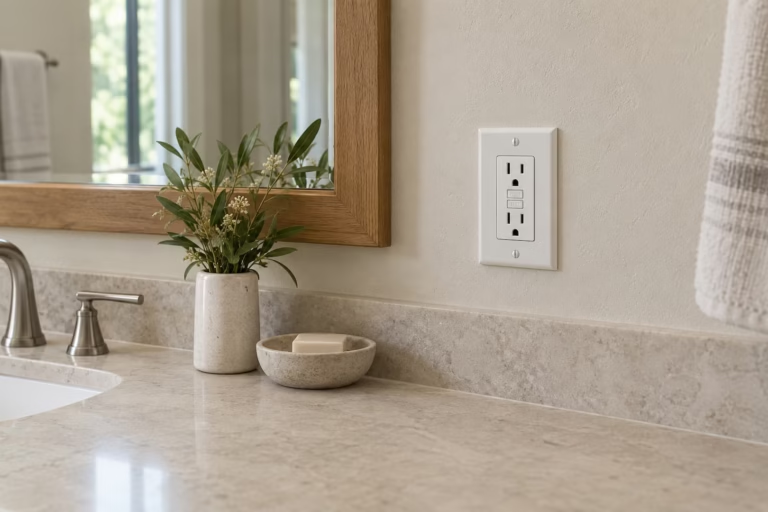
An electrician may be able to use a permitted GFCI replacement arrangement for an ungrounded receptacle, with the required labeling. Leviton explains this option. GFCI protection reduces ground-fault shock risk; it does not add an equipment ground, repair deteriorated insulation or increase circuit capacity. Equipment that requires grounding still needs an appropriate supply.
Do not remove a plug’s grounding pin or use an adapter as a substitute for correcting the installation. If one ungrounded outlet is the immediate concern, ask the electrician to explain both the allowed receptacle solution and the wider condition of the circuit.
Before adding attic or wall insulation
Pause the insulation project when suspected knob and tube wiring turns up. The electrical contractor and insulation contractor need to establish what is active and what the local authority allows before anything is covered.
This is an area where broad online claims can mislead. The Department of Energy’s weatherization health and safety guidance says that requirements depend on the jurisdiction and that some authorities allow insulation only under specified conditions. That is not permission to bury existing wiring. Get a decision for the actual property and proposed work.
Ask for the electrical findings in writing, and give them to the insulation contractor. If wiring is to be abandoned, have its disconnection verified before work proceeds. A photograph showing one cut end cannot establish what happens to the rest of a hidden run.
Does all knob and tube wiring need to be replaced?
Use the inspection findings to decide what needs replacing. Failing insulation, undocumented alterations or circuits that cannot serve the intended loads are reasons to discuss replacement. The electrician also needs to account for the circuits that will remain, your renovation plans and any requirements from the permitting authority or insurer.
A partial rewire may be appropriate for a defined area, but it must clearly identify what remains. Replacing the kitchen wiring does not establish that upstairs lighting has been updated. Ask the contractor to map the affected circuits and explain how old and new portions will be separated.
Solir Electric’s house rewiring service in Sacramento can help turn inspection findings into a project scope. If the condition is still uncertain, start with an electrical inspection and discuss replacement after the findings are available.
What determines the cost of replacing knob and tube?
Two homes of the same size can need very different amounts of work. In one, an electrician can reach the circuit routes through an open attic. In the other, those routes run through finished walls and ceilings. The quote needs to account for access, plaster repairs and the number of outlets and lighting points, as well as the wiring itself.

Ask each bidder to price the same scope. A useful written estimate identifies:
-
- The rooms, circuits, outlets and lighting points included, plus any old wiring that will remain.
-
- Whether panel work, grounding improvements or additional circuits are included or quoted separately.
-
- How wiring will be routed and where walls or ceilings may need to be opened.
-
- Who handles plaster or drywall repair, texture matching and paint.
-
- Who obtains permits, arranges inspections and supplies the completion records.
-
- Expected power interruptions, access requirements and how any discoveries change the price.
For a Sacramento property, confirm the permitting jurisdiction before scheduling. The City of Sacramento lists residential rewire work among its minor electrical permit scopes. A combined remodel or a property outside city limits may follow a different process. Have the contractor confirm the permit route for your address.
Buying a house or answering an insurance question
Get the electrical assessment early enough to use it. A seller’s statement that the home has been “updated” should be backed by a description of the work, permits where applicable and inspection records. Find out whether the update covered the panel, selected rooms or every relevant branch circuit.
Ask the insurer what it will require for this particular property, whether active knob and tube affects eligibility, and what documentation it needs after repairs. Request the answer in writing before relying on a general quote. An electrician’s report and an insurer’s underwriting decision serve different purposes.
Can old ceramic knobs stay after rewiring?
Unused hardware can remain in some projects, but the contractor must establish that abandoned conductors are properly disconnected and deal with them as the project and local requirements dictate. Ask the completion report to distinguish remaining hardware from any remaining active wiring.
Will replacing the electrical panel solve the problem?
Panel replacement and branch-circuit replacement are different tasks. A new panel may be part of the project, but it does not renew the insulation or connections inside existing walls. The quote should say which circuits will actually receive new wiring.
What should I send before an inspection?
Send the property address, approximate construction year, existing inspection report, renovation history and any photographs already available. Mention planned insulation or remodeling and any electrical symptoms. There is no need to expose wiring yourself to prepare for the visit.
For an older Sacramento home, contact Solir Electric or call (916) 776-8689 to arrange an assessment. Ask for a clear account of what remains active, what needs attention and what the proposed work will cover.