
When a circuit breaker keeps tripping, an overloaded circuit is one possibility. A short circuit, ground fault, damaged connection or faulty appliance can also cut the power. Breakers with arc-fault or ground-fault protection may trip even with very little equipment running. The load alone does not tell the whole story.
Stop resetting a breaker that trips again. Leave the affected circuit off and arrange electrical service. If you see smoke or fire, leave and call 911. Stay away from a panel that is wet, visibly damaged, sparking or making unusual crackling sounds.
What was happening just before the power went out?
Did the power go out when you switched on the toaster, with the kettle already running? Or did a bedroom circuit trip overnight? Tell the electrician what happened just before the interruption. The timing narrows the investigation, even though it cannot prove the cause.
| Trip pattern | Possible explanation | Useful detail to report |
|---|---|---|
| After several appliances run together | The circuit may be overloaded | Which appliances were operating and whether they share a circuit. |
| Immediately when one appliance starts | An appliance fault, short circuit or another electrical fault | The appliance model and exactly when power cuts out. |
| Immediately after a reset | A fault may still be present | Leave the circuit off; say that it will not stay on. |
| With nothing visibly plugged in | Fixed wiring, hardwired loads, other outlets or the protective device may be involved | Which lights and built-in equipment are also affected. |
| After rain or irrigation | Moisture may be affecting equipment or wiring | The wet locations and the timing of water exposure. |
| At irregular times | Cycling equipment, an intermittent connection or a protection trip | Time of day and any appliance that had just started. |
Write down what you already observed. Do not repeatedly start a suspect appliance to demonstrate the trip. If a breaker has a visible fault indicator, a photo taken without removing covers can preserve useful information. Its meaning depends on the exact product.

An overload is about the circuit, not the number of empty sockets
A branch circuit supplies a group of outlets or a particular appliance. Its breaker protects the circuit from excess current. Adding another outlet adapter or power strip gives you more places to plug in, but does not increase that circuit’s capacity.
Consider a 1,500-watt space heater on a nominal 120-volt supply. Its approximate current is 1,500 ÷ 120, or 12.5 amps. A second 1,500-watt load would bring that simple example to about 25 amps, before counting anything else. That exceeds both a 15-amp and a 20-amp branch-circuit rating. Actual equipment nameplates and circuit conditions matter; this calculation is an illustration, not a circuit-design rule.
An overload can take time to trip the breaker; a severe fault may trip it much faster. Record the delay if you noticed it, but do not use a particular number of seconds as a diagnosis.
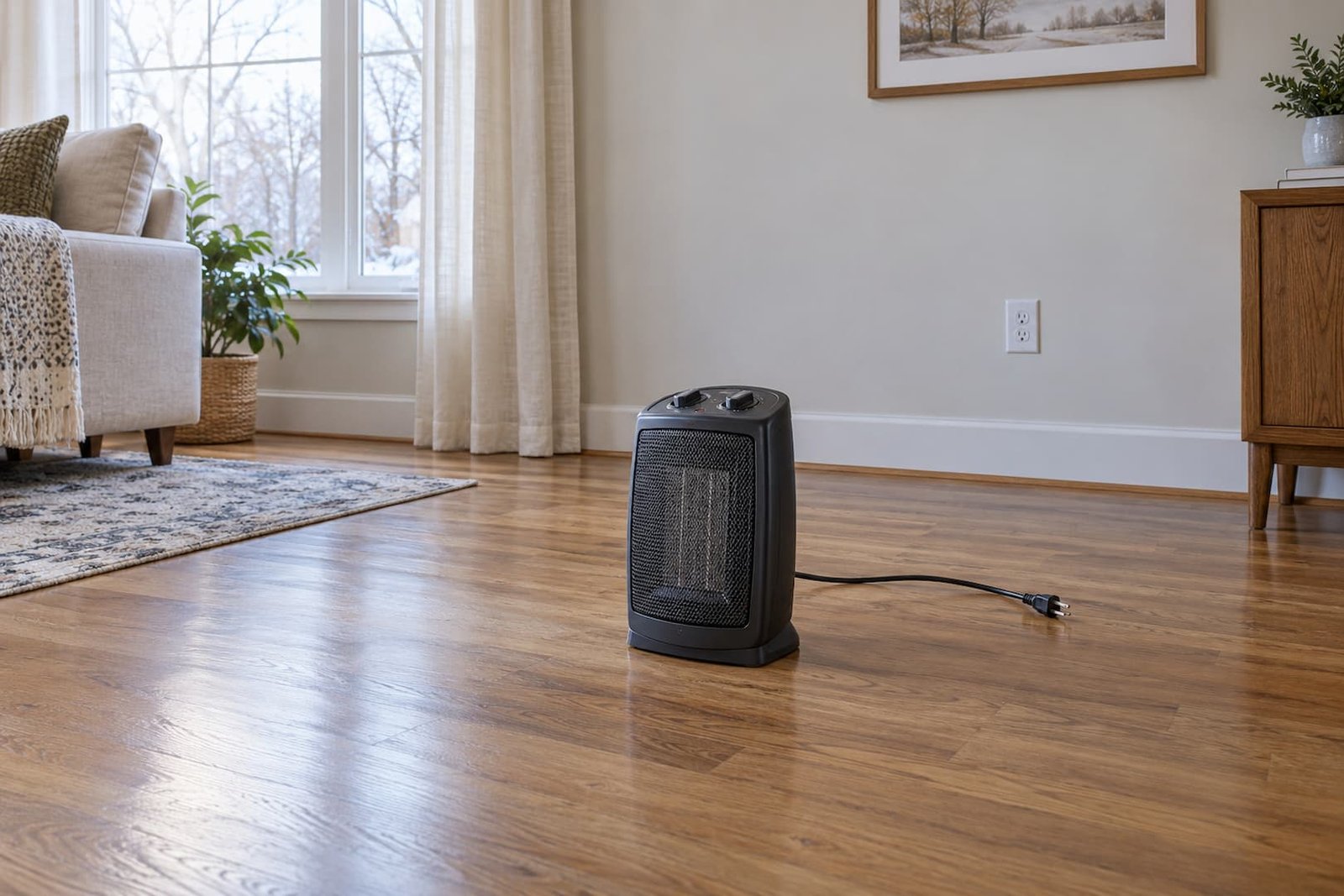
Stop running high-demand appliances together on a circuit that has overloaded. Moving a plug to the other side of the room may not help because the outlets can share wiring. The Electrical Safety Foundation’s overload guidance also explains why power strips do not add capacity and why heat-producing appliances need appropriate wall connections.
If normal daily use repeatedly overloads the circuit, discuss a dedicated circuit with an electrician. The appropriate repair depends on the wiring, existing load and appliance requirements. A single overloaded branch circuit does not by itself establish that the entire service panel needs replacement.
Short circuits, ground faults and arc faults are different problems
A short circuit creates an unintended low-resistance path between conductors, such as hot and neutral. It can produce a large current. A ground fault lets current leave its intended path toward ground, potentially through a person. Damaged insulation or wet equipment can be involved, but the outside appearance may give no clue.
Arcing occurs when electricity jumps across a gap. A damaged cord or loose connection can create hazardous arcing without drawing enough current to trip a conventional breaker immediately. Arc-fault circuit interrupters, or AFCIs, look for characteristics of hazardous arcing. GFCIs detect current imbalance to reduce shock risk. Eaton explains the different purposes of AFCI and GFCI protection.
A dual-function breaker combines AFCI and GFCI protection with its overcurrent protection. A breaker labeled “combination AFCI” is not necessarily dual-function: “combination” refers to types of arc-fault protection. Check the full product label or manual. The ESFI breaker guide makes this distinction.
A trip under a light load can still signal a fault. Keep the required protection in place while the cause is investigated. Installing a breaker with a higher amp rating just to prevent trips can leave the existing wiring inadequately protected.
Why it can trip with nothing plugged in
“Nothing plugged in” often describes only the outlets you can see. Ceiling lights, an exhaust fan or other fixed equipment may still connect to the circuit. A receptacle behind furniture may serve something you forgot about. Even an appliance that is switched off can remain electrically connected.
If the breaker still trips after accessible plug-in loads have been removed, stop there. The remaining possibilities include a wiring fault, a problem with fixed equipment, or the breaker itself. Finding which one requires controlled testing. Do not remove receptacles, disconnect neutrals or swap breakers as a trial.
A recently changed fixture, a new appliance or drilling into a wall shortly before the first trip is relevant history. So is a trip that appears only when an outdoor light or bathroom fan runs. Give that information to the electrician without trying to recreate an unsafe condition.
When one reset is reasonable, and when to leave it off
For a single trip after an obvious overload that you have removed, one reset may be reasonable if the panel and surrounding area are dry and undamaged and there are no warning signs. Follow the breaker manufacturer’s instructions. If it has already tripped repeatedly, the cause is unknown, or it supplies critical equipment you cannot interrupt safely, arrange help instead.
- Turn off and unplug accessible equipment on the affected circuit. Do not handle a hot, wet or damaged plug.
- Identify the branch breaker from the circuit directory and visible handle position. A tripped handle may sit between ON and OFF. Do not cycle unrelated breakers or remove the panel’s screwed-on cover.
- For a conventional toggle breaker, the reset usually requires moving the handle fully to OFF before returning it to ON. Use the normal handle only and follow its instructions; do not force or hold it in position.
- If it trips again, leave it off. If it stays on, keep the suspected excess load disconnected. A successful reset does not explain a recurring problem.
This OFF-then-ON operation is also described in ESFI’s home electrical safety workbook. It does not authorize repeated attempts to energize a circuit that still has a fault.
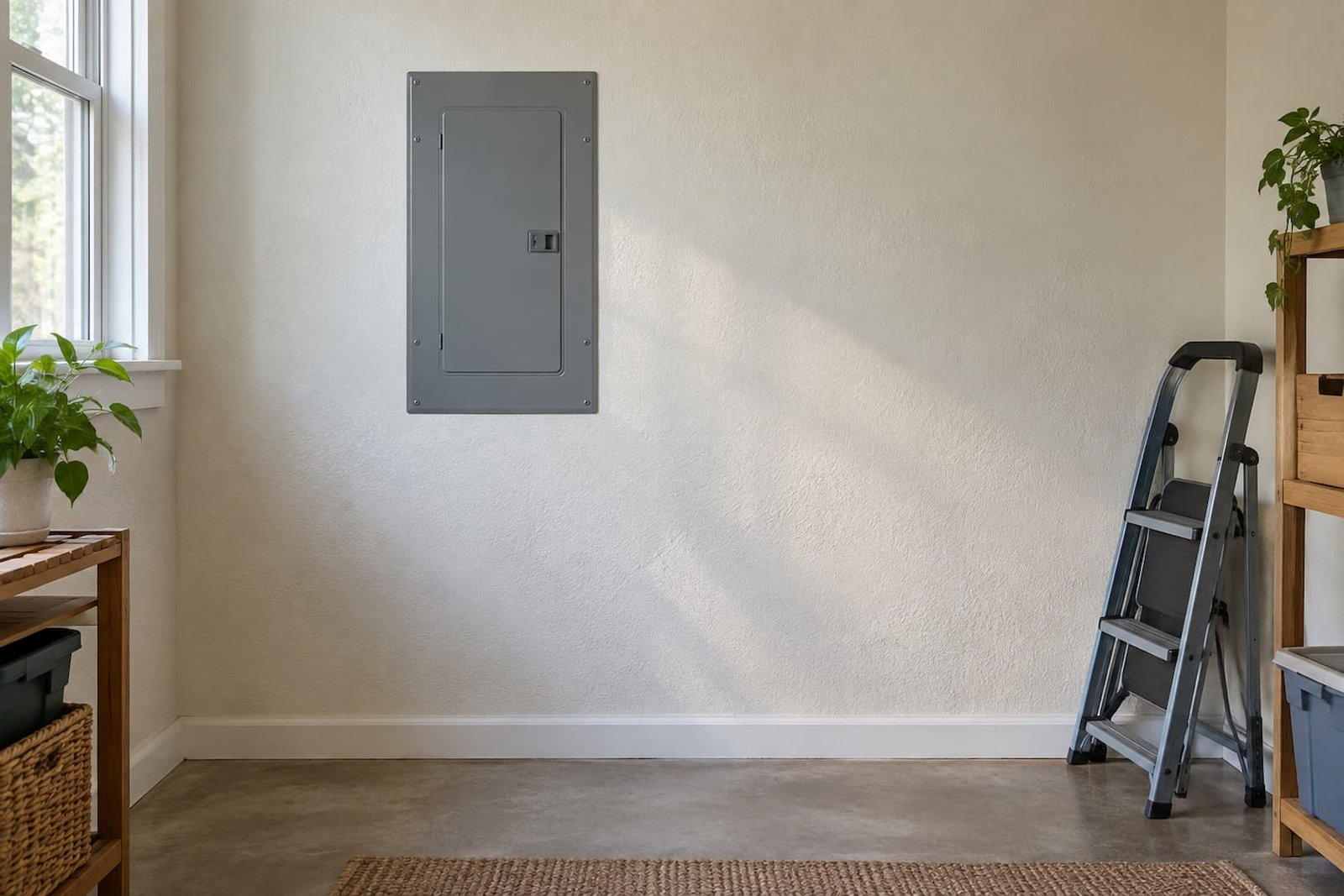
If only a receptacle’s TEST/RESET device has tripped while the panel breaker remains on, you may be dealing with a GFCI outlet rather than a breaker trip. Note which device actually changed state. That distinction helps avoid unnecessary work at the panel.
What an electrician needs to check
An electrician checks the affected circuit and what it supplies. The symptoms guide the tests: measuring current, examining connections, isolating equipment, or reading the breaker’s diagnostic information. Those checks help distinguish a failed protective device from a fault it is correctly interrupting.
Trip codes are product-specific. Schneider Electric’s guidance for certain AF and AFGF breakers describes recalling stored trip indications. That is a model-specific diagnostic feature, not a universal meaning for every blinking light. Share the model or a safe exterior photo rather than guessing from a chart for another breaker.
Repair may involve an appliance, a connection or a damaged section of wiring. A capacity problem may call for another circuit. Panel work becomes relevant when testing identifies equipment damage, incompatibility or insufficient capacity for the proposed loads; an open space in the panel alone does not answer that question.
Ask whether the visit includes a diagnostic fee and how the electrician will quote any repair found. Tracing an intermittent fault is different work from replacing a confirmed failed breaker. A useful estimate identifies the problem, the proposed repair and any additional access or permit requirements.
Does repeated tripping mean the breaker is bad?
It can, but it can also mean the breaker is responding correctly. Replacing it without checking the circuit can leave the cause in place. Diagnosis should come before choosing a replacement.
Can I replace a 15-amp breaker with a 20-amp breaker?
Not as a remedy for tripping. The conductors, equipment and installation must support the breaker rating. An electrician must assess the circuit and use a breaker permitted for that panel.
What if an air conditioner or refrigerator starts the trip?
Record whether it happens as the equipment starts or later while it runs. Motor starting, an equipment fault and a circuit problem call for different checks. Stop resetting the breaker; the equipment may need an appliance or HVAC technician as well as an electrician.
What if the main breaker trips or several rooms lose power?
A main-breaker trip needs broader assessment than one dead outlet. Keep clear of damaged equipment and contact an electrician. If power is out across neighboring properties, check your utility’s outage information too. In SMUD territory, its storm and outage guidance explains how to distinguish a possible utility outage from a problem at the property.
For recurring trips in Sacramento, request electrical troubleshooting from Solir Electric or call (916) 776-8689. Include the rooms affected, what was running and whether the breaker tripped immediately or after a delay. If it will not stay on, leave that circuit off until the fault has been assessed.