
A GFCI outlet that won’t reset may have lost incoming power, detected a fault, or failed internally. Incorrect wiring can also prevent a reset, especially after a replacement. Check what else lost power before assuming the outlet is broken. If it trips again, stop pressing RESET.
If you notice a burning smell, scorch marks, crackling, a shock, or water at the outlet, leave it alone and call an electrician. For smoke or fire, leave the area and call 911. The checks below are for dry, undamaged equipment that you can reach safely, with every electrical cover left in place.
Why the reset button may not stay in
GFCI stands for ground-fault circuit interrupter. It watches for a difference between the current leaving and returning through the circuit and disconnects power when it detects leakage that could cause a shock. People also call it a GFI. Its job differs from the overload protection provided by a standard circuit breaker.
Many modern GFCIs include reset lockout: they refuse to restore power when the device cannot provide protection. A dead receptacle does not automatically mean the GFCI itself has failed. Leviton’s reset-lockout guidance identifies missing supply power, a continuing ground fault, wiring mistakes and device damage as possible causes.
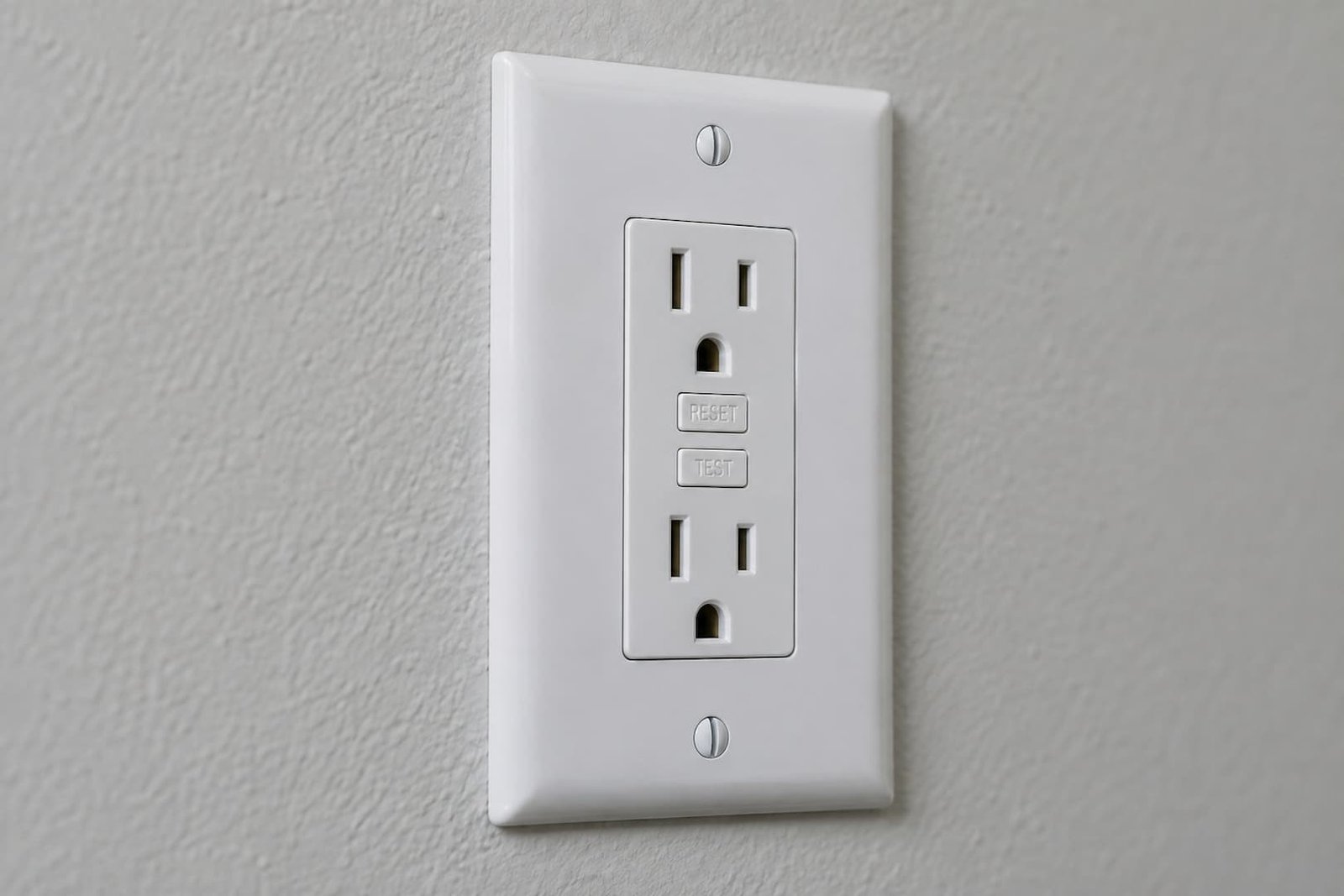
| What you notice | What could explain it | What to do next |
|---|---|---|
| No power and no indicator light | A tripped upstream device, loss of supply, or a failed GFCI | Check the extent of the outage and the model’s instructions. |
| RESET will not latch with appliances unplugged | No supply power, a downstream fault, wiring trouble, or device failure | Arrange diagnosis if the external checks below do not resolve it. |
| It resets, then trips when an appliance runs | A problem with that appliance or the circuit serving it | Stop using the appliance. Do not keep reproducing the trip. |
| Several bathroom, garage or outdoor outlets are dead | One GFCI may protect multiple outlets | Look for an accessible upstream GFCI. |
| The problem appeared after rain or a leak | Moisture may have reached an outlet, enclosure or connected equipment | Keep away from wet equipment and have the cause checked. |
What you can check without opening the outlet
First, unplug accessible appliances from the affected outlet and any other dead outlets you know are on the same circuit. Switching an appliance off is not the same as unplugging it. Leave heavy appliances in place if reaching the plug means moving them or reaching into an unsafe area.
Check whether the problem affects one receptacle, several rooms, or the whole house. A hallway light that still works does not prove that a bathroom outlet has power; they may use different circuits. During a wider outage, wait for the supply to return rather than repeatedly pressing RESET.
-
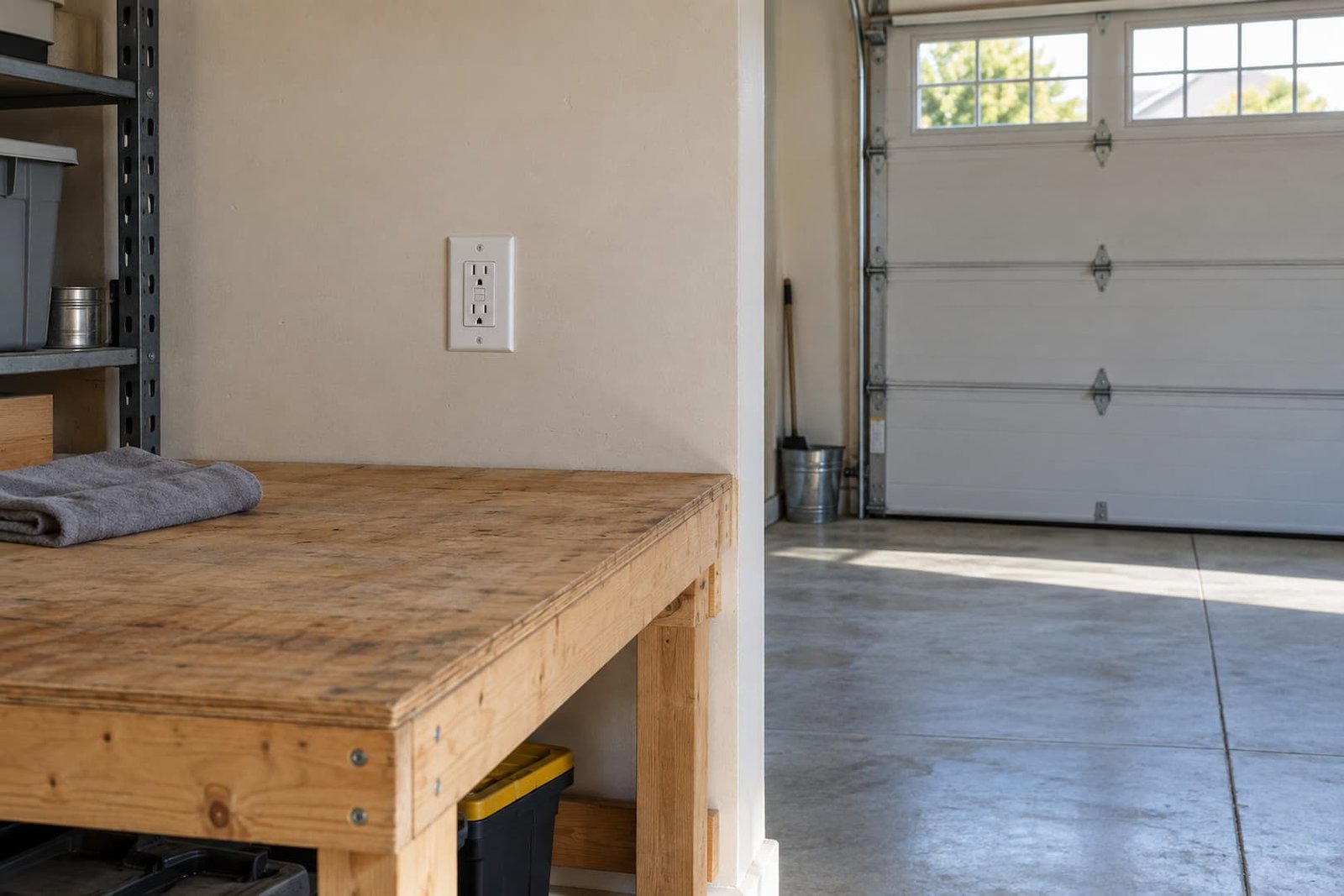
- Look for another GFCI. Check accessible bathrooms, the garage, kitchen and outdoor locations. One device can disconnect ordinary-looking outlets farther along the same circuit. Do not assume the nearest GFCI is the one that supplies yours.
-
- Look at the breaker position. Only approach a dry, undamaged panel. You can open its normal hinged access door, but leave the screwed-on cover in place. If a clearly identified branch breaker has tripped after a known overload was removed, follow its instructions for one reset. Stop if it trips again or the cause is uncertain.
-
- Try the appropriate GFCI once. With the area dry, equipment intact and accessible loads unplugged, press RESET as the manufacturer directs. If an upstream device restores supply, the affected GFCI may then need its own reset. Do not force a stubborn button or use a tool.
-
- Stop if power does not return. A button that clicks without restoring power still needs investigation. Leave the outlet unused rather than removing its wallplate or probing the slots.
If the outlet resets and passes its prescribed test, reconnect only dry, undamaged appliances according to their instructions. Should one appliance trigger another trip, unplug it if safe and stop using it. Moving a suspect appliance to an unprotected outlet bypasses the warning rather than identifying the fault.
The breaker is on, but the GFCI still has no power
The breaker looks on. Why is the outlet still dead? Another protective device may have opened the circuit, or a damaged connection may have interrupted power between the panel and receptacle. Looking at the handle cannot rule out either problem. An electrician needs to test whether power reaches the outlet.
An upstream GFCI is easy to overlook in a garage or a rarely used bathroom. “Upstream” simply means closer to the supply along that circuit, not necessarily closer to the panel in the floor plan. Wiring can travel through a room you would not expect.
Tell the electrician which outlets stopped working together and whether the lights went out too. Name the rooms and locations. If you already tried a reset, describe what happened: did the button click, did power return, and did the device trip again?
A noncontact voltage pen or a small plug-in tester cannot establish every condition inside the circuit. Do not treat an absent light or a tester reading as proof that the wiring is safe to touch. Solir Electric can investigate the supply and connections through its outlet and switch repair service in Sacramento.
Red, green or no light: check your particular model
Check the model before interpreting the light. Its meaning depends on the product and whether the receptacle is set or tripped. A green indicator alone does not prove that the wiring is correct or that the sockets have power.
For instance, Leviton’s indicator chart distinguishes the button position and power state as well as the LED color. Some listed models can show green with reversed LINE and LOAD connections. Persistent red indications can require replacement. Use the chart for the actual device, not a color explanation for a different brand.
If the outlet stopped working immediately after installation or replacement, tell the installer. LINE identifies the incoming supply; LOAD can feed protected outlets downstream. Reversing those connections can prevent a modern GFCI from resetting, as the manufacturer’s installation instructions explain. Checking and correcting the wiring is work for a qualified electrician.
When rain or a leak comes before the trip
An outdoor trip may involve the receptacle enclosure, a damaged cord, landscape equipment or another device on the protected circuit. A closed cover helps protect an outlet, but it does not tell you whether moisture has entered through a damaged seal or elsewhere.
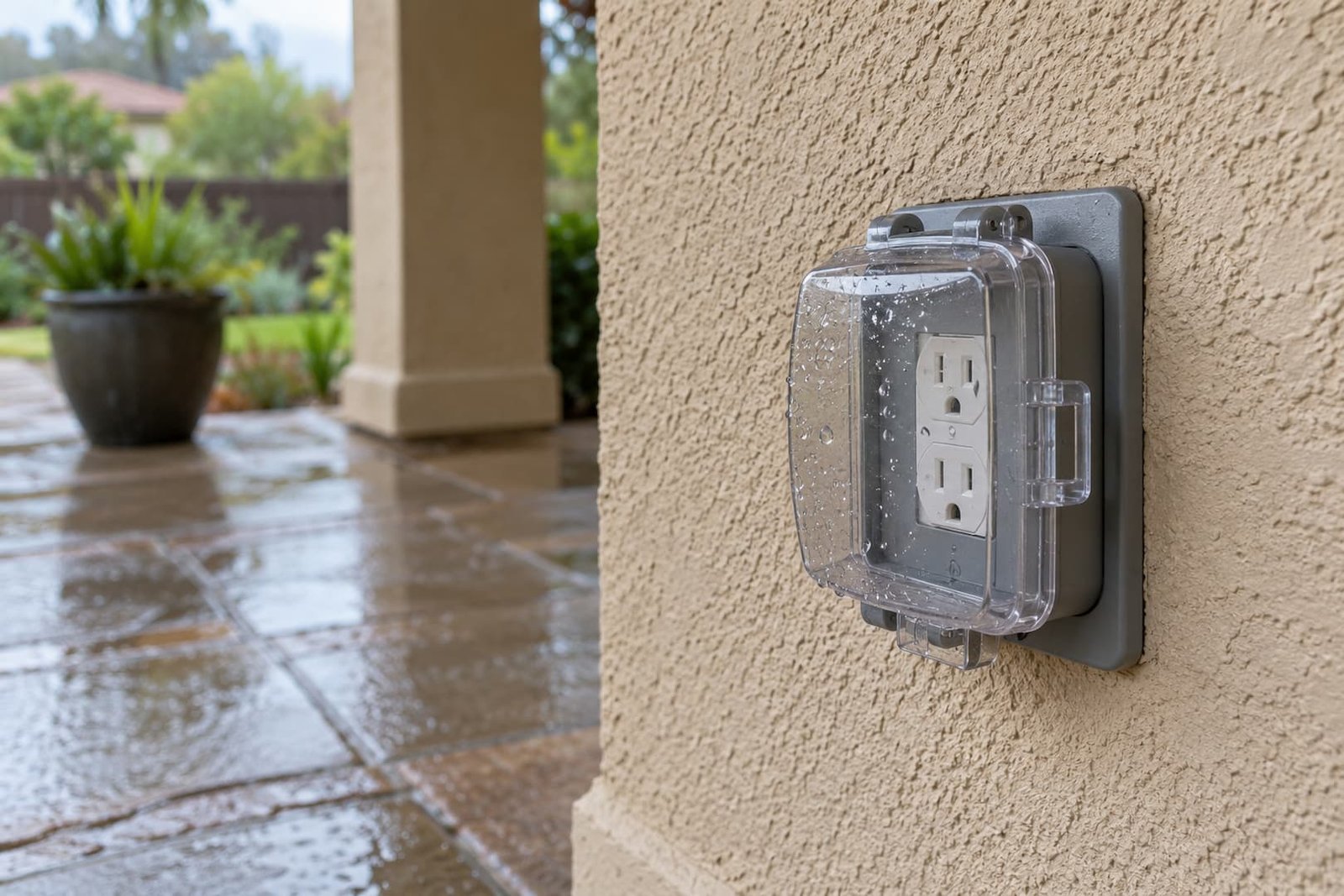
Do not reach into a wet enclosure, reconnect wet cords, or use a hair dryer to dry electrical parts. If an outlet or box got wet, keep it out of service until it has been assessed. An outlet that works again when the weather changes can still have an unresolved water-entry problem.
For a service visit, note whether the trip followed rain, irrigation or a plumbing leak. Photos of the outside of a dry, accessible cover may help, but leave the cover and device assembled. Keep people away from any area with standing water near electrical equipment.
Testing, replacement and the next service call
Once normal operation has returned, test the GFCI using its built-in TEST and RESET buttons and the manufacturer’s procedure. The test should interrupt power at the protected receptacle, and RESET should restore it. If either part fails, stop using the outlet. The U.S. Consumer Product Safety Commission recommends testing GFCIs at least monthly, after a power failure and as directed by the manufacturer.
A damaged GFCI or one that fails its test may need replacement. But a new receptacle cannot restore a missing supply or repair faulty wiring elsewhere on the circuit. The electrician needs to find where power stops and why before deciding what to replace.
A service request should include the outlet’s location, the other areas without power, and what was running when the problem started. Mention recent electrical work or water exposure. Ask whether a diagnostic visit is charged separately and whether the estimate includes the replacement device and any necessary wiring repair.
Can a GFCI fail with nothing plugged into it?
Yes. Other outlets may be connected to its protected LOAD side, so an empty face does not mean the entire circuit is unloaded. Missing supply power, a wiring fault or failure inside the device can also prevent reset.
Does a GFCI need a ground wire to reset?
A GFCI senses current imbalance without relying on an equipment grounding conductor. It does not create a ground where none exists. Leviton describes the distinction for older two-slot outlets. Have an electrician assess the circuit and any required labeling; the reset button is not a grounding test.
Why is only the hair dryer dead when the outlet works?
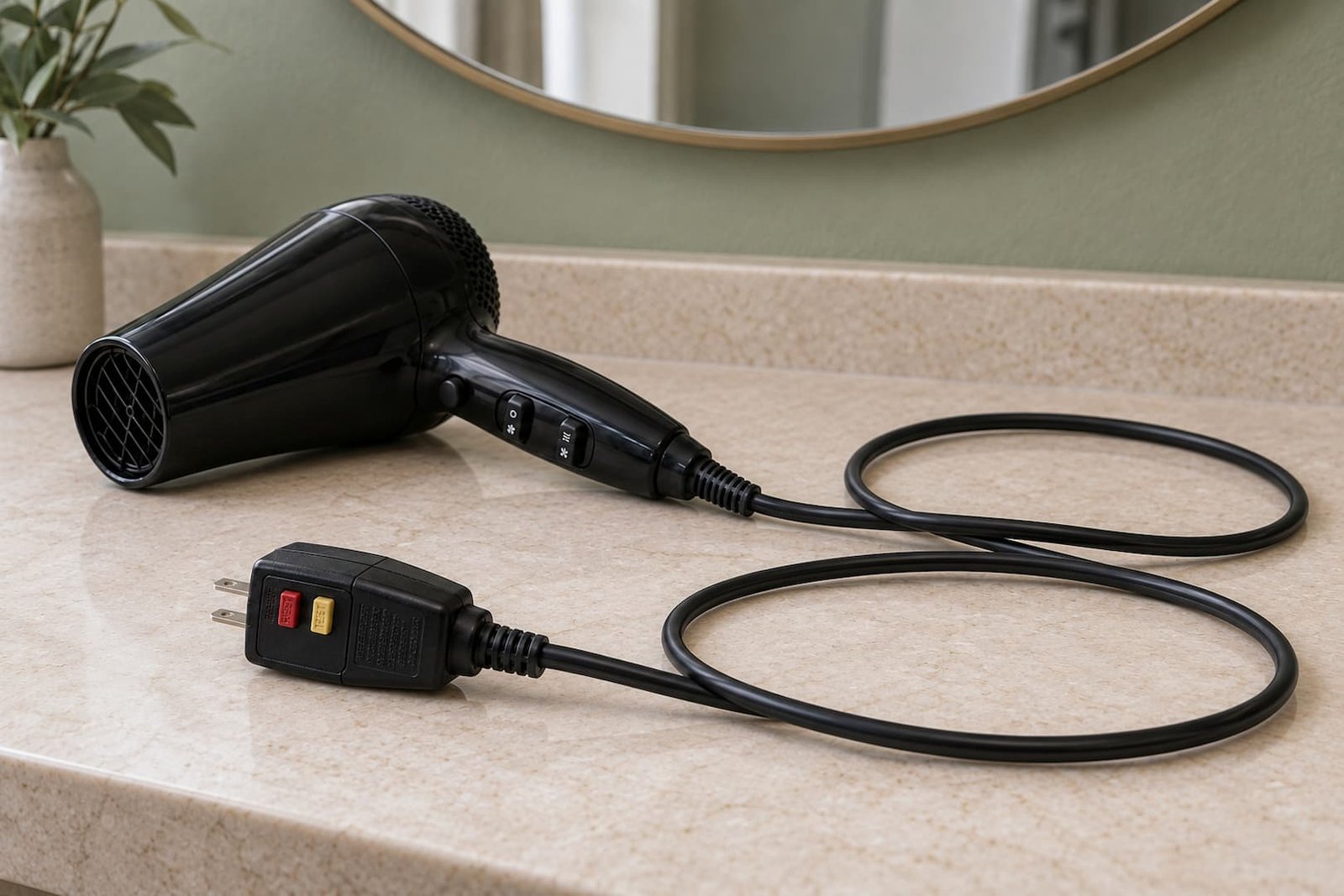
A hair dryer may have its own protective device on the plug. The CPSC explains this built-in protection. Follow the appliance’s instructions, and stop using it if its protection will not reset, it trips again, or the dryer or cord is damaged. The plug device and wall GFCI operate separately.
Should I replace the GFCI with an ordinary outlet?
Removing required protection to stop tripping leaves the cause unresolved. Have the fault diagnosed and the correct protection maintained.
For a GFCI that still will not reset in your Sacramento home, contact Solir Electric or call (916) 776-8689. Tell us whether the problem affects one outlet or several so we can discuss the appropriate service visit.