LED lights can flicker because the bulb and dimmer do not work well together, the dimmer is set below the bulb’s usable range, or a bulb or driver is failing. A loose electrical connection or a supply problem can also cause flicker. The useful starting point is the pattern: one light or several, only when dimmed or at every setting, and before or after a recent change.
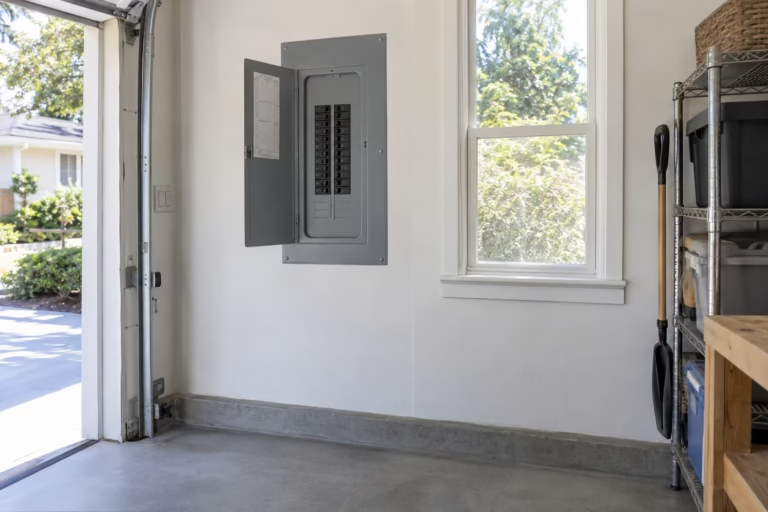
If flickering comes with a burning odor, crackling, discoloration, a shock or a breaker that repeatedly trips, stop using the affected circuit and arrange electrical help. Do not remove covers or touch equipment to check for heat. For smoke or fire, leave the area and call 911.
Start with where and when the lights flicker
Observe the lights during ordinary use; do not keep switching large appliances on to provoke the problem. Note whether the flicker is visible to your eyes or appears only in a phone recording. A camera can reveal light modulation that does not look the same in person, so a video alone is not an electrical diagnosis.
| Pattern | Possible cause | Useful next step |
|---|---|---|
| Only near the dimmer’s lowest setting | The bulb reaches its dimming limit before the control does. | Check model compatibility and the permitted low-end adjustment. |
| One replaceable bulb flickers | Bulb trouble, unsuitable bulb type or a problem at that fixture. | Consider one correct replacement if it is safe and accessible. |
| Every light on one dimmer flickers | A shared control, incompatible load or circuit connection. | Record bulb and dimmer models; arrange checks if compatibility is not the answer. |
| Flicker at full brightness or without a dimmer | Bulb, driver, fixture or supply fault. | Do not assume a dimmer adjustment will resolve it. |
| Lights in different rooms change together | A problem shared farther back in the supply. | Contact an electrician; a utility check may also be needed. |
| Faint glow or occasional flashes while off | Some electronic controls pass a small current through the load. | Check guidance for the exact control and lamp combination. |
Use the pattern as a starting point. Then look at what changed: did the flicker begin after new bulbs, a smart switch, a replaced fixture, electrical work or a storm? That history helps the electrician choose what to check first.
LED lights flickering on a dimmer
A bulb marked “dimmable” still needs a compatible dimmer. A control that worked with incandescent lamps may not operate the replacement LEDs smoothly. Look up the exact bulb and control model, rather than matching only wattage or the brand name.
Lutron’s LED troubleshooting guidance starts with the lamp type and compatibility. It also explains that some lamps cannot remain stable at the dimmer’s lowest setting. A lamp marked non-dimmable should not be used on a conventional dimming control.
When low-end trim can help
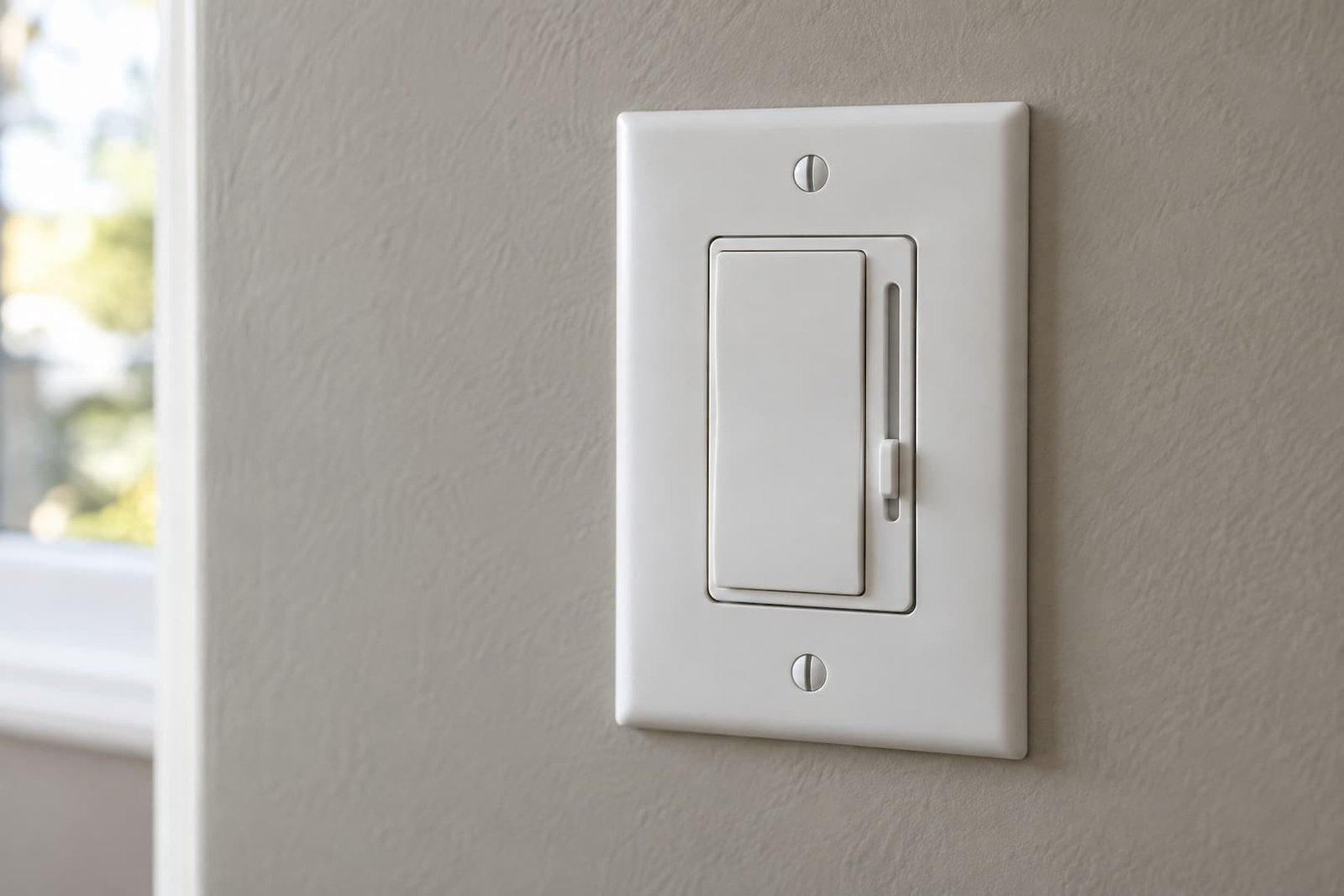
Low-end trim sets the dimmer’s minimum operating level. If the lamps are stable at a higher setting but flicker or go out near the bottom, a compatible control may allow that minimum to be raised. You give up part of the dimming range to keep the lights stable.
Follow the instructions for the exact model. Some controls allow adjustment through front buttons; others use a different procedure. Lutron’s dual-control instructions, for example, describe a model-specific adjustment. Leave any operation requiring removal of a wallplate or access to wiring to an electrician. Low-end trim is not a remedy for a loose connection or flicker at every brightness.
Check the LED rating, not the incandescent equivalent
Dimmer limits depend on the load type. For example, Lutron lists different LED and incandescent capacities for its Maestro models. “60-watt equivalent” describes a bulb’s light output comparison; it is not the bulb’s electrical input power.
As a simple arithmetic example, six 9-watt LEDs draw a nominal total of 54 watts, not 360 watts because their packages compare brightness with 60-watt incandescent bulbs. That calculation alone does not establish compatibility. The control’s allowed lamp count, load type and installation limits still apply.
Choose the right bulb before buying another dimmer
Keep the package or photograph the bulb’s information when it is already safely removed. Confirm the exact model, actual wattage, dimmable marking and any restrictions for enclosed fixtures. Two lamps can look identical while using different electronics.
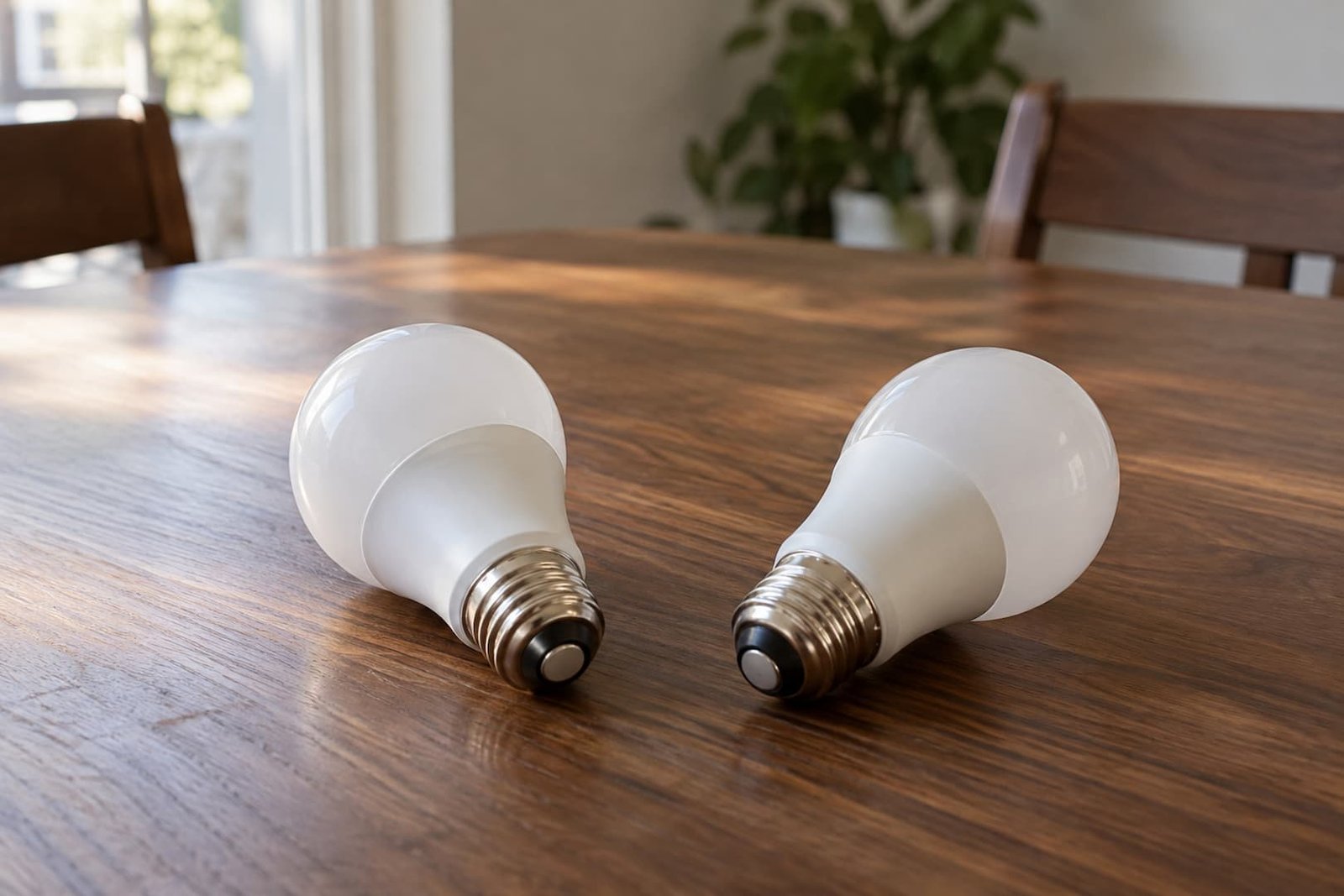
When one control supplies several replaceable lamps, check every lamp in the group. A recent single-bulb replacement is useful history. A manufacturer-tested combination gives you a better starting point than another bulb chosen only because the base fits.
Smart bulbs deserve a separate check. Many manage dimming internally and are intended to receive steady power. Philips Hue explains how its smart bulbs dim internally. Do not assume that setting a conventional wall dimmer to maximum makes it suitable; use the bulb manufacturer’s approved controls and supply arrangement.
One light flickers, but the others stay steady
If the bulb is designed to be changed by the user, safely within reach and free of damage or warning signs, try one correct known-good replacement. Unplug a portable lamp; for a fixed fixture, switch off its circuit before changing the bulb. Let it cool and follow the fixture instructions. Use stable access and stay within the fixture rating. Leave a high ceiling or damaged lamp holder to a professional.

If the correct replacement works normally, retire the suspect bulb. If flicker continues at the same fixture, arrange a fixture and circuit check. Do not bend socket contacts, tighten hidden terminals or keep buying bulbs to avoid diagnosing a persistent problem.
A fixed LED fixture may have no screw-in bulb at all. Its driver supplies the LEDs, and the driver, light engine or an electrical connection may need attention. Record the fixture model from purchase records if available. Taking apart a hardwired fitting is not part of a homeowner check.
Flickering recessed LEDs and integrated fixtures
If several recessed lights flicker together, note whether they share one control. If only one behaves differently, identify its position. This distinction helps the electrician decide where to begin without claiming that the remaining lights prove the circuit is sound.
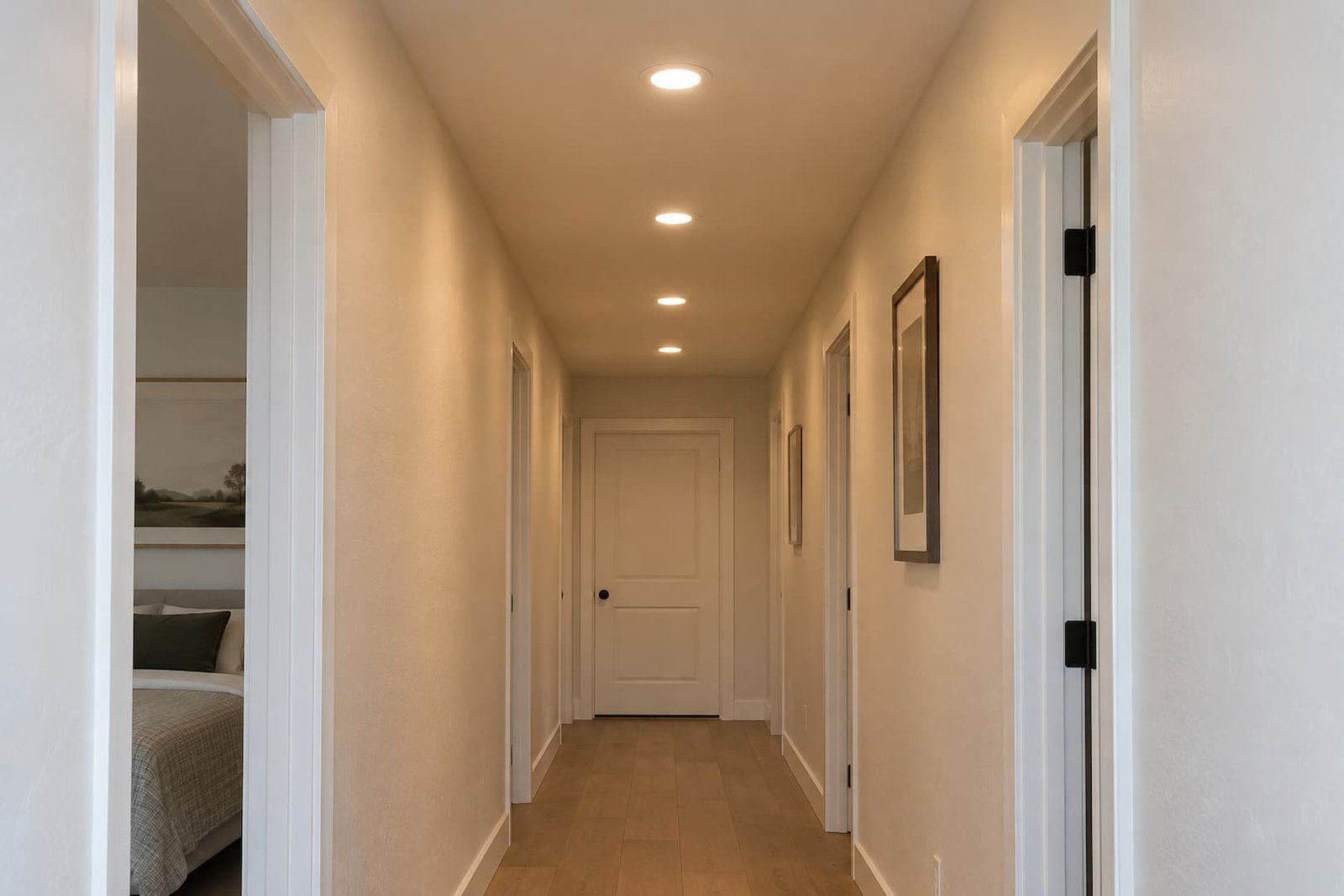
Low-voltage lighting adds another compatibility question: the transformer or driver must work with both the lamps and the dimmer. Lutron’s low-voltage LED guidance describes matching the combination and checking minimum and maximum loads. A generic LED dimmer label does not cover every transformer or driver.
Bring the fixture and control model information to the repair visit. Solir Electric’s light fixture installation and repair service can assess the fitting and its supply before recommending a replacement.
Why LEDs may glow or blink when switched off
Some electronic controls need a small amount of power for their own operation. Depending on the wiring arrangement and lamp electronics, that can produce a faint glow or periodic flash in the off state. Lutron describes this behavior for certain non-neutral controls and sensitive LED loads.
Use the guidance for the actual product. A compatible lamp, a different control or another manufacturer-approved solution may be appropriate after assessment. Do not add a loose resistor or capacitor, borrow a neutral from another circuit, or treat “off” as proof that wires are safe to touch.
When the problem reaches beyond one light
Flickering in several rooms, a sudden large brightness change or partial loss of power needs a broader check. Contact an electrician and describe the extent of the problem; the utility may also need to check its supply. Do not open the meter enclosure or panel to investigate.
In SMUD territory, the utility’s outage information provides reporting and support options. A nearby outage can be useful context, but the absence of an outage notice does not establish that your home’s supply is normal.
If a breaker is also opening, that is a separate protective action to report. See our guide to a circuit breaker that keeps tripping; repeated resets are not a fix for flickering lights. ESFI also recommends electrical inspection for unexplained dimming or flicker at lighting controls.
What to record before the repair visit
-
- Which rooms and fixtures are affected, and whether they change together.
-
- Whether flicker occurs only when dimmed, at full output or while switched off.
-
- Bulb, fixture and dimmer model numbers available from packaging, receipts or existing records.
-
- When the problem began and what was changed beforehand.
-
- Whether it coincides with ordinary appliance use, and whether there are noises, smells or breaker trips.
If the flicker comes and goes, a short video taken from a safe location may help. Say whether you could also see it with your eyes. Leave covers in place, and do not recreate an event that produced heat, noise or a trip just to record it.
Will replacing the dimmer always fix LED flicker?
No. It may help when compatibility is the cause, but a bulb, driver, connection or supply problem needs a different repair. Check the symptom pattern and equipment models before choosing parts.
Is a little buzzing normal?
Some lamp-and-control combinations make an audible hum, but new or worsening noise deserves attention. Crackling, burning odor, discoloration or unusual heat changes the situation: stop using the affected equipment and arrange electrical help.
What if the LEDs flicker with no dimmer installed?
A conventional dimmer mismatch is then less likely, but a lamp, driver, fixture or circuit problem remains possible. An electronic switch or sensor can also affect compatibility. Report the installed control type rather than assuming every switch operates the same way.
For persistent flickering in Sacramento, request electrical troubleshooting from Solir Electric or call (916) 776-8689. The model numbers and symptom notes help the electrician distinguish a lighting compatibility issue from a fault requiring repair.